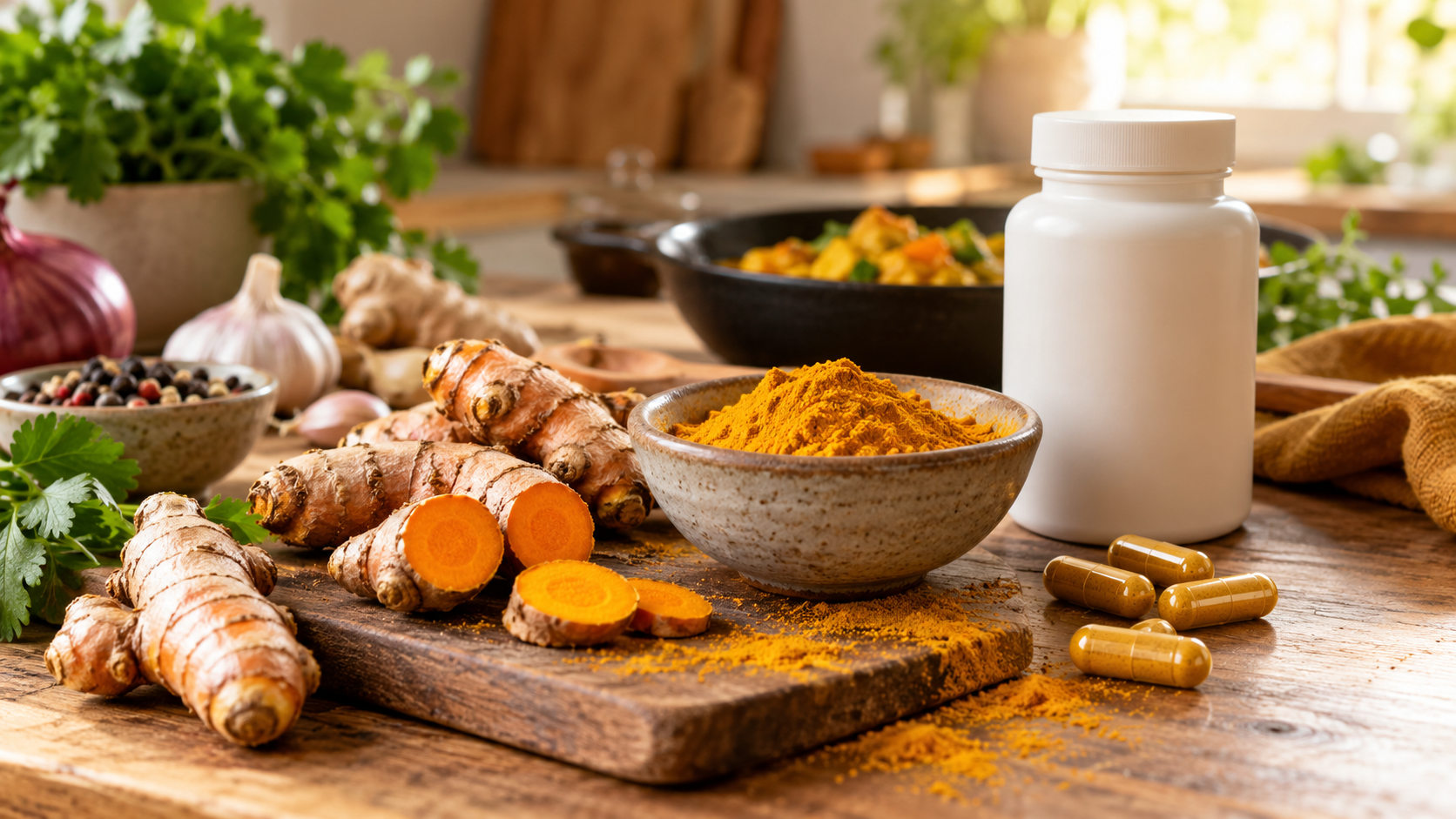
Turmeric is a familiar yellow spice, while curcumin supplements are concentrated products sold for a wide range of purposes. The words are often used as if they mean the same thing, but they do not.
The useful question is not whether turmeric is “good” or “bad.” It is what the product contains, what outcome has actually been studied, and whether the person’s health context makes a concentrated supplement worth discussing.
What this guide covers
- turmeric as food versus curcumin as a supplement;
- what research suggests for knee osteoarthritis;
- labels, piperine and bioavailability claims;
- side effects and liver-safety warning signs.
This is general information and does not replace medical advice.
Turmeric and curcumin are related, not identical
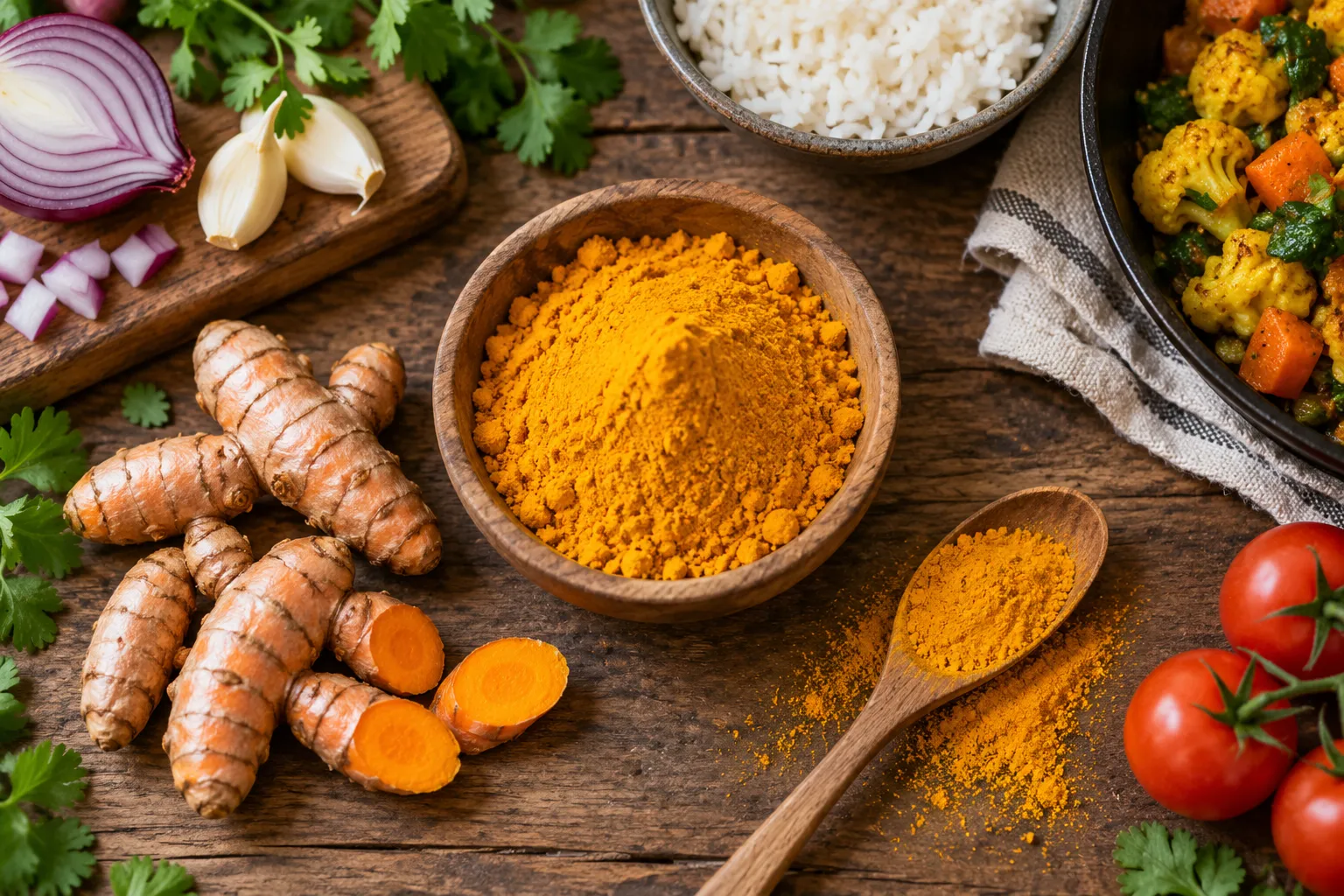
Turmeric is the rhizome of Curcuma longa used as a spice and in traditional practices. Curcumin is one group of compounds that contributes to turmeric’s colour and is commonly concentrated in supplements.
Food use and supplement use are different exposures. A curry or a small amount of spice does not tell you how a concentrated capsule will behave, especially when the product is designed to increase absorption.
What does the research suggest?
Turmeric and curcumin have been studied for several conditions. NCCIH says it is difficult to draw definitive conclusions because products vary in composition and many studies are small or short.
The most relevant human evidence is often discussed around knee osteoarthritis. Several systematic reviews report possible improvements in pain, stiffness or function over short study periods, but the studies use different extracts, doses and comparators. That uncertainty means there is no universal “best turmeric” product, and a supplement should not replace an assessment of persistent joint pain.
Evidence for broad claims such as detoxification, guaranteed inflammation reduction, disease prevention or replacing prescribed treatment is not established by those studies.
Read the product label carefully
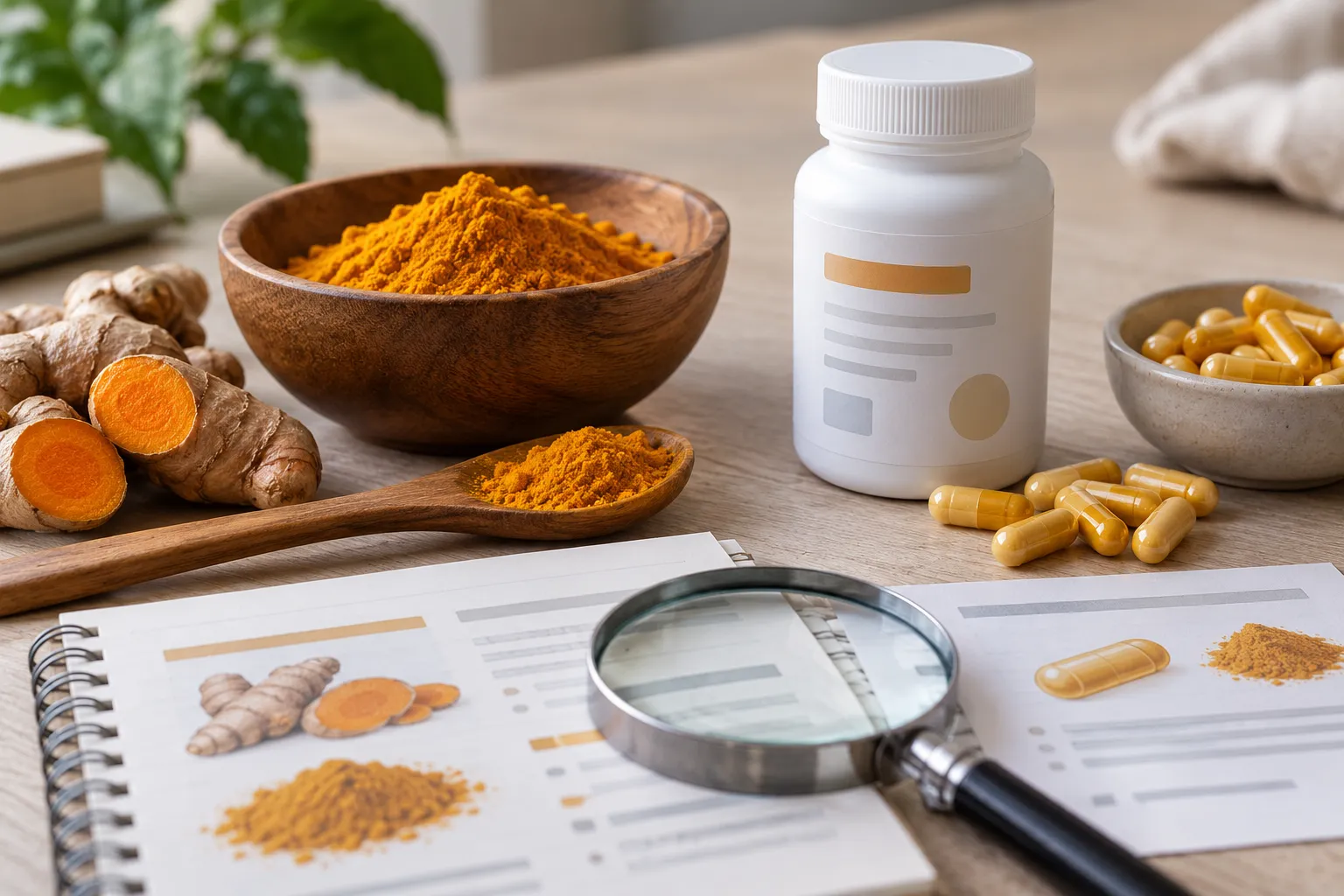
Look for the botanical name, plant part, amount per serving and whether the product contains turmeric powder, a curcumin extract or a blend. Check added ingredients and the exact form of any “enhanced absorption” claim.
Some products add piperine from black pepper or use other methods to increase bioavailability. That may change how much is absorbed and can change the interaction and safety questions. A larger absorption claim is not automatically a better health outcome.
Side effects and liver warning signs
Oral turmeric can cause nausea, vomiting, acid reflux, stomach upset, diarrhoea or constipation. Highly bioavailable formulations have been associated with reports of liver injury in some people.
Stop taking the product and contact a healthcare professional promptly if fatigue, nausea, loss of appetite, dark urine or yellowing of the skin or eyes appears. Those symptoms require attention; they should not be dismissed as a normal “detox” response.
Medicines, pregnancy and health conditions
Talk with a qualified professional before using a concentrated turmeric or curcumin supplement if you take medicines, are pregnant or breastfeeding, have liver or gallbladder problems, or are preparing for surgery or another medical treatment.
Dietary supplements are not approved by the FDA for safety and effectiveness before they are sold. A professional can help distinguish an ordinary culinary use from a concentrated product that may carry different risks.

A simple checklist
Before buying, ask:
- Am I choosing a food spice or a concentrated extract?
- What specific outcome am I trying to address?
- Does the label identify the preparation and amount clearly?
- Does it contain piperine or another absorption-enhancing ingredient?
- Do medicines, pregnancy, surgery or a liver/gallbladder condition make advice important?
- Do I know which symptoms mean I should stop and seek help?
The bottom line
Turmeric can be a useful culinary spice, and some short-term studies suggest that specific curcumin products may help some knee osteoarthritis symptoms. But the products are not interchangeable, the evidence is not a blank cheque for broad claims, and safety deserves attention—especially with highly bioavailable formulations.
Keep food and concentrated supplements separate in your thinking, read the full label, and ask a professional when medicines or health conditions are involved.
Common questions
Is turmeric the same as curcumin?
No. Turmeric is the plant or spice; curcumin is a major compound in it. A supplement may contain turmeric powder, a curcumin extract or a blend.
Does turmeric help joint pain?
Some short-term trials suggest possible improvement in knee osteoarthritis pain or function, but the evidence is heterogeneous and does not establish one best product or dose.
Why do products add black pepper or piperine?
Piperine can increase curcumin absorption, but changing bioavailability can also change interactions and safety considerations.
Can turmeric supplements affect the liver?
Liver injury has been reported, particularly with some highly bioavailable formulations. Stop the product and seek medical advice for fatigue, nausea, poor appetite, dark urine or jaundice.
Who should avoid turmeric supplements?
People who are pregnant, take medicines, have a liver or gallbladder condition, or are preparing for treatment or surgery should ask a qualified professional before using concentrated products.
Sources
- National Center for Complementary and Integrative Health. Turmeric: Usefulness and Safety.
- PubMed / BMJ Sports & Exercise Medicine. Therapeutic effects of turmeric or curcumin extract on pain and function for knee osteoarthritis.
- PubMed. The efficacy and safety of Curcuma longa extract and curcumin supplements on osteoarthritis.
- NIH Office of Dietary Supplements. Dietary Supplements: What You Need to Know.
This article is for general information and isn’t a substitute for personal medical advice. If you have health concerns, speak to a qualified professional.