Ginger is both a familiar kitchen ingredient and a concentrated botanical supplement. That makes it easy to assume that a capsule is simply “more ginger.” In reality, the preparation, amount and reason for use can change the question completely.
The useful starting point is not whether ginger is natural. It is what outcome you want, which form you are considering, and whether your health context makes advice important.
What this guide covers
- ginger as food, tea and supplement;
- what research suggests about nausea and cramps;
- why motion-sickness and broad wellness claims need caution;
- labels, side effects and medicine interactions.
This is general information and does not replace medical advice.
Ginger as food
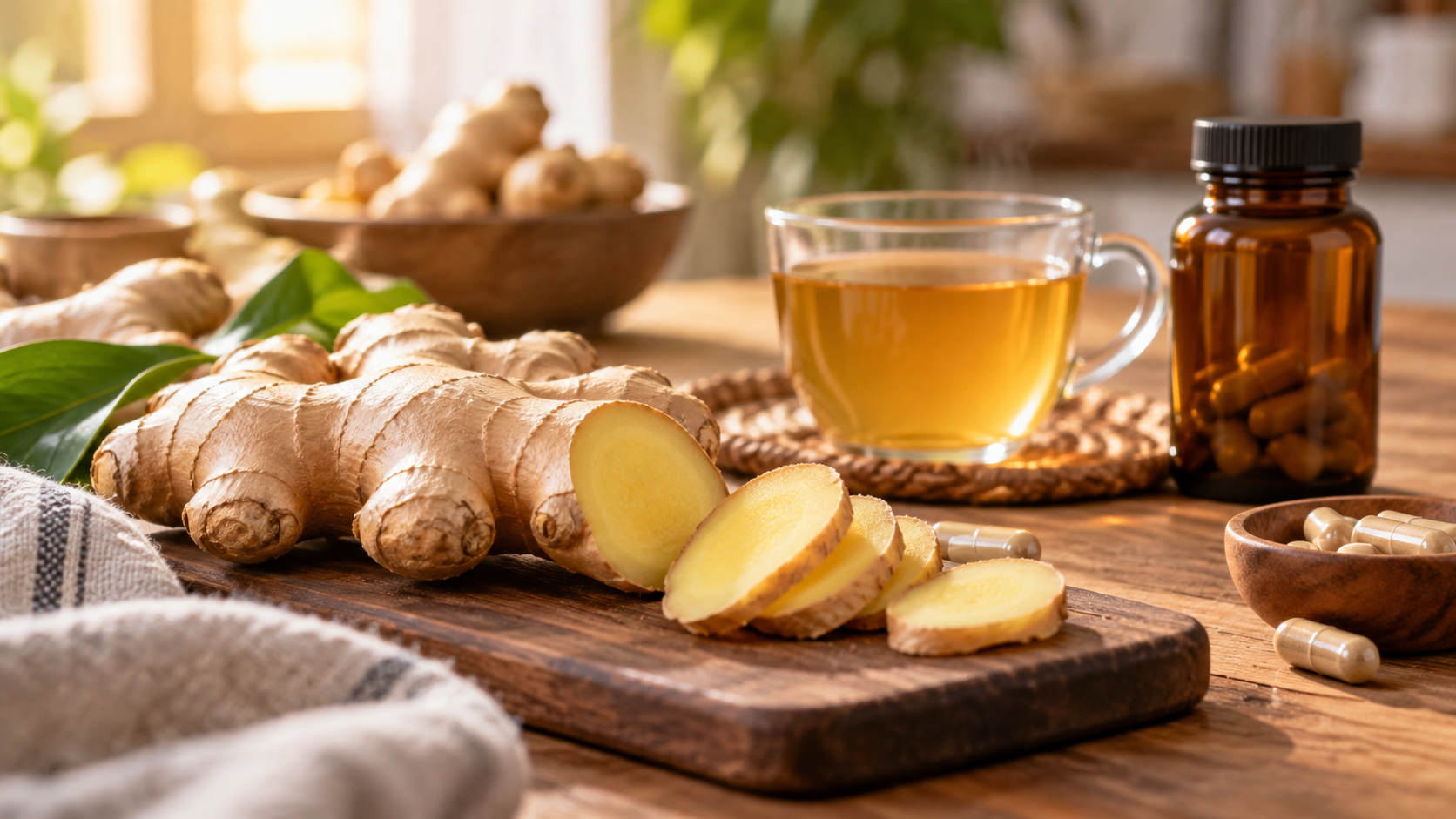
Fresh or dried ginger can add flavour to meals, tea and cooking. Food use is usually less concentrated than an extract or capsule, but the amount in a homemade drink can still vary widely.

Food also comes with a practical advantage: it is easy to use in small amounts and does not require treating a broad health claim as a diagnosis. If you enjoy ginger in food, that is a reasonable food choice; it does not automatically mean a concentrated supplement is needed.
What has ginger been studied for?
NCCIH reports that ginger has been studied for several types of nausea and vomiting. Research suggests it may help pregnancy-related nausea, while evidence is uncertain for nausea after surgery or during chemotherapy. Most studies have not shown a clear benefit for motion sickness.
Ginger supplements may also reduce the severity of menstrual cramps for some people. That finding is not a promise for every person, and it does not turn ginger into a treatment for unexplained or severe pain.
The evidence is about specific preparations and outcomes. It should not be stretched into claims that ginger “detoxes,” cures inflammation, replaces cancer treatment or guarantees better digestion.
Food, tea, powder and capsules are different
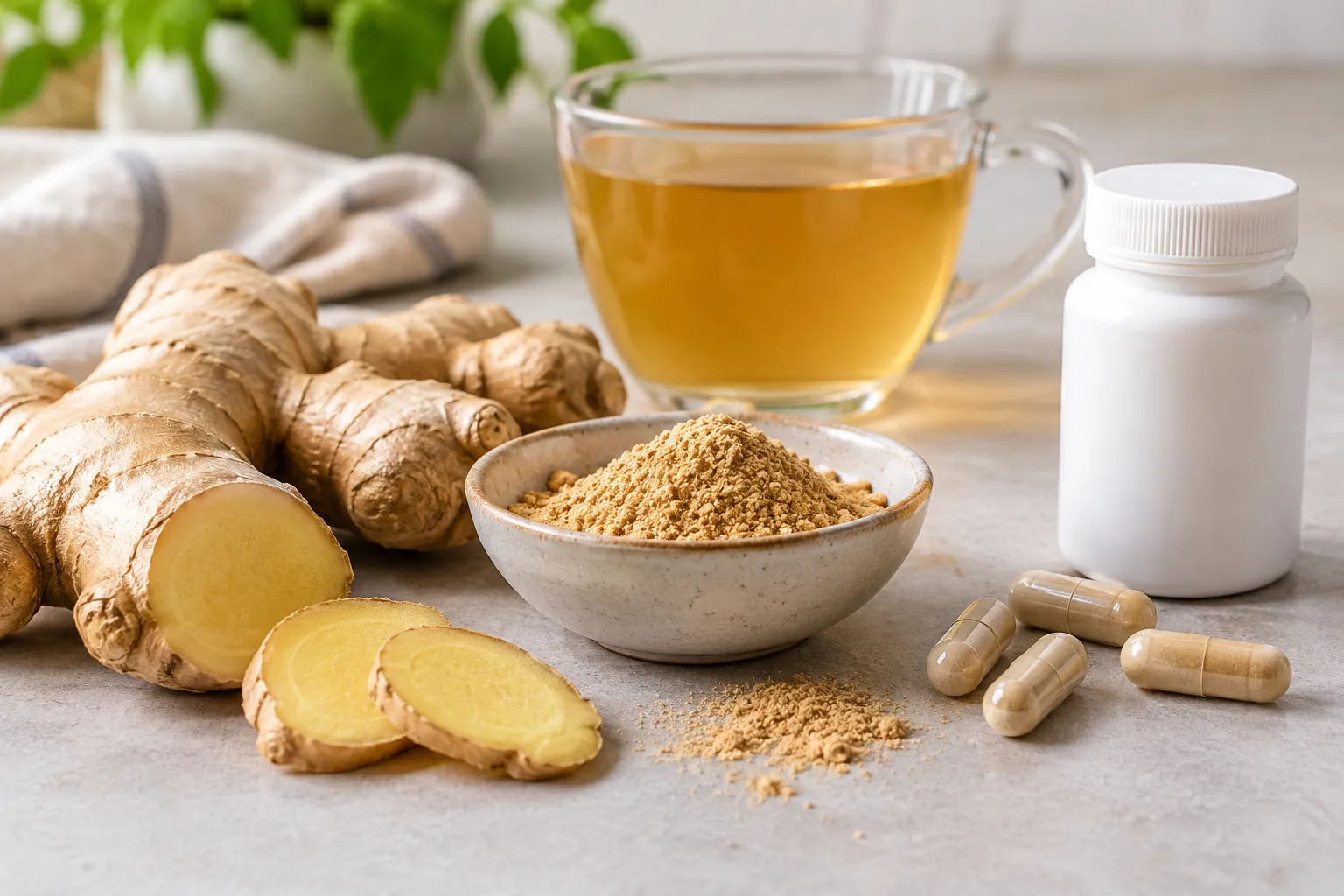
Fresh root, dried powder, tea, standardized extract and capsules can differ in concentration and in the compounds they deliver. A label may list ginger root, an extract ratio, a standardized constituent or a proprietary blend. Those terms are not interchangeable.
Check the serving size, the botanical name, the plant part used, the amount per serving and any added ingredients. Do not assume that a larger number on the front means a better product; the useful comparison is between a clearly identified preparation and a relevant goal.
Side effects and interactions
Oral ginger can cause abdominal discomfort, heartburn, diarrhoea and mouth or throat irritation. A symptom after starting a product is a reason to reassess the product, not proof that it is working.
If you take medicines, ask a healthcare professional before using ginger capsules or extracts. Interactions can matter even when an herb is sold without a prescription. Extra care is sensible during pregnancy or breastfeeding, before surgery, during cancer treatment, and when a person has a condition or a complex medicine list.

A simple checklist
Before choosing a ginger supplement, ask:
- What specific outcome am I trying to address?
- Could food or tea meet my preference without a concentrated product?
- What preparation and amount does the label actually identify?
- Am I taking a medicine or facing a health situation that needs advice first?
- What will I do if heartburn, diarrhoea or another side effect appears?
The bottom line
Ginger can be a useful food and may have a role for some specific symptoms, but the strength of evidence depends on the situation. Keep food use, tea and concentrated supplements conceptually separate, read the label carefully, and ask for advice when medicines, pregnancy, treatment or persistent symptoms are involved.
Common questions
Is ginger tea the same as a ginger supplement?
No. Food and tea may contain less concentrated amounts than a capsule or extract, and the actual strength varies by preparation.
Does ginger help nausea?
It may help some forms of nausea, especially pregnancy-related nausea, but evidence differs by situation and it should not replace medical care or prescribed anti-nausea treatment.
Does ginger help motion sickness?
Strong evidence is lacking; most studies summarized by NCCIH have not shown a clear benefit for motion sickness.
Can ginger supplements cause side effects?
Yes. Oral ginger can cause abdominal discomfort, heartburn, diarrhoea or mouth and throat irritation.
Who should ask before taking ginger capsules?
Ask a qualified professional if you take medicines, are pregnant or breastfeeding, have a medical condition, or are considering ginger around surgery or cancer treatment.
Sources
- National Center for Complementary and Integrative Health. Ginger: Usefulness and Safety.
- PubMed. Ginger for treating nausea and vomiting: an overview of systematic reviews and meta-analyses.
- NIH Office of Dietary Supplements. Ginger — Botanical Backgrounder.
This article is for general information and isn’t a substitute for personal medical advice. If you have health concerns, speak to a qualified professional.