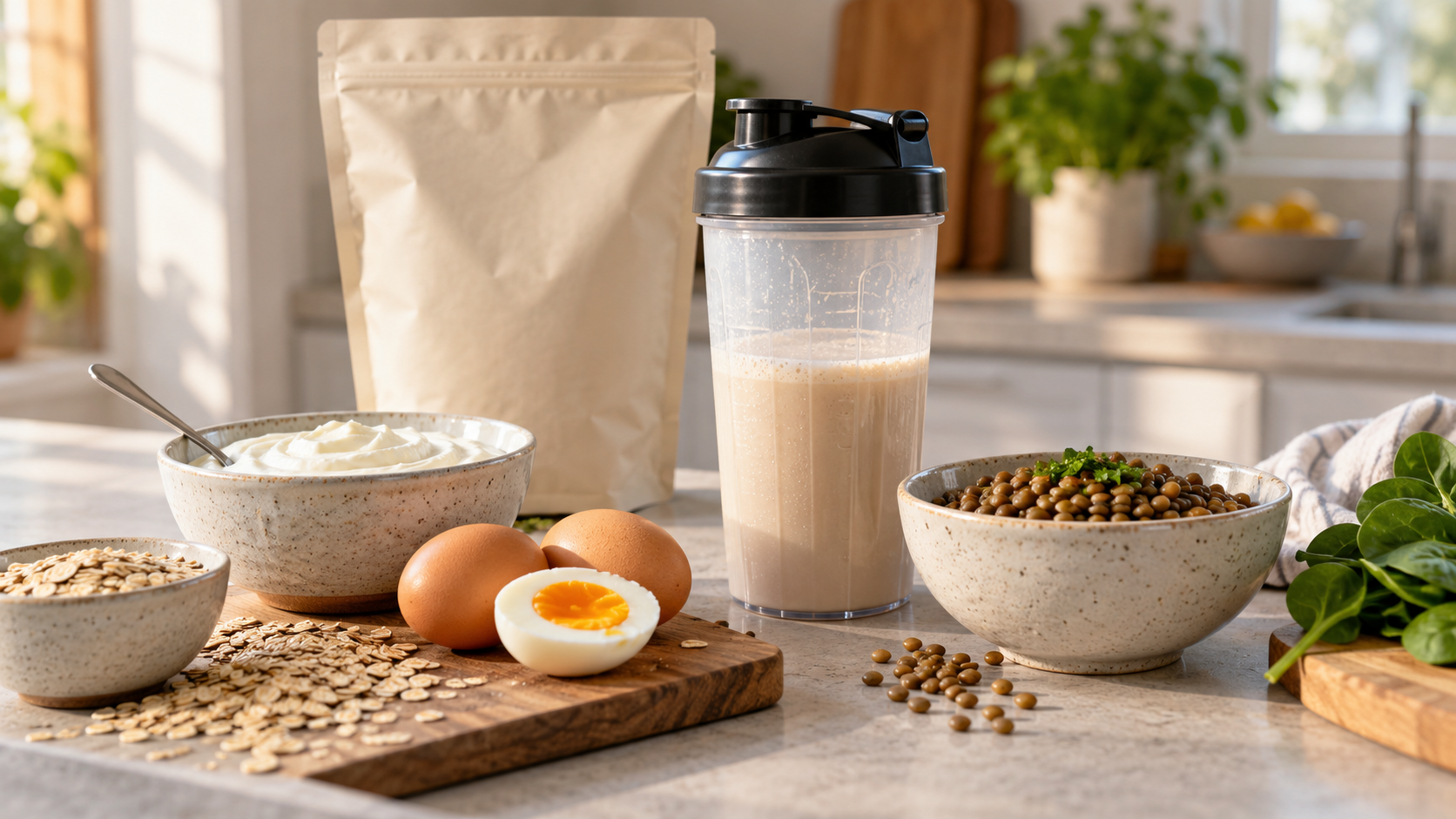
Protein powders are often presented as essential gym equipment. In practice, they are usually a convenient food: useful when a person struggles to reach a reasonable protein intake through meals, but not automatically better than food.
The most helpful question is not “which powder is the best?” It is “what problem am I trying to solve, and does this product solve it simply?”
What this guide covers
- when a powder may be useful;
- how whey, casein and plant proteins differ;
- what to compare on the label;
- timing, digestion and food-first choices;
- when medical or professional advice matters.
This is general information. It does not prescribe a personal protein target or diagnose a nutrition problem.
Start with the reason, not the tub
Many people can meet their protein needs with foods such as yogurt, eggs, fish, meat, tofu, beans, lentils, nuts and whole grains. Food also brings fibre and other nutrients that a powder may not provide.
A powder can make sense when someone has a busy schedule, a low appetite, limited cooking access, a higher training load or a dietary pattern that makes convenient protein difficult. It can also be useful after exercise when a normal meal is not practical. None of those situations makes a supplement mandatory.
Whey, casein and plant protein
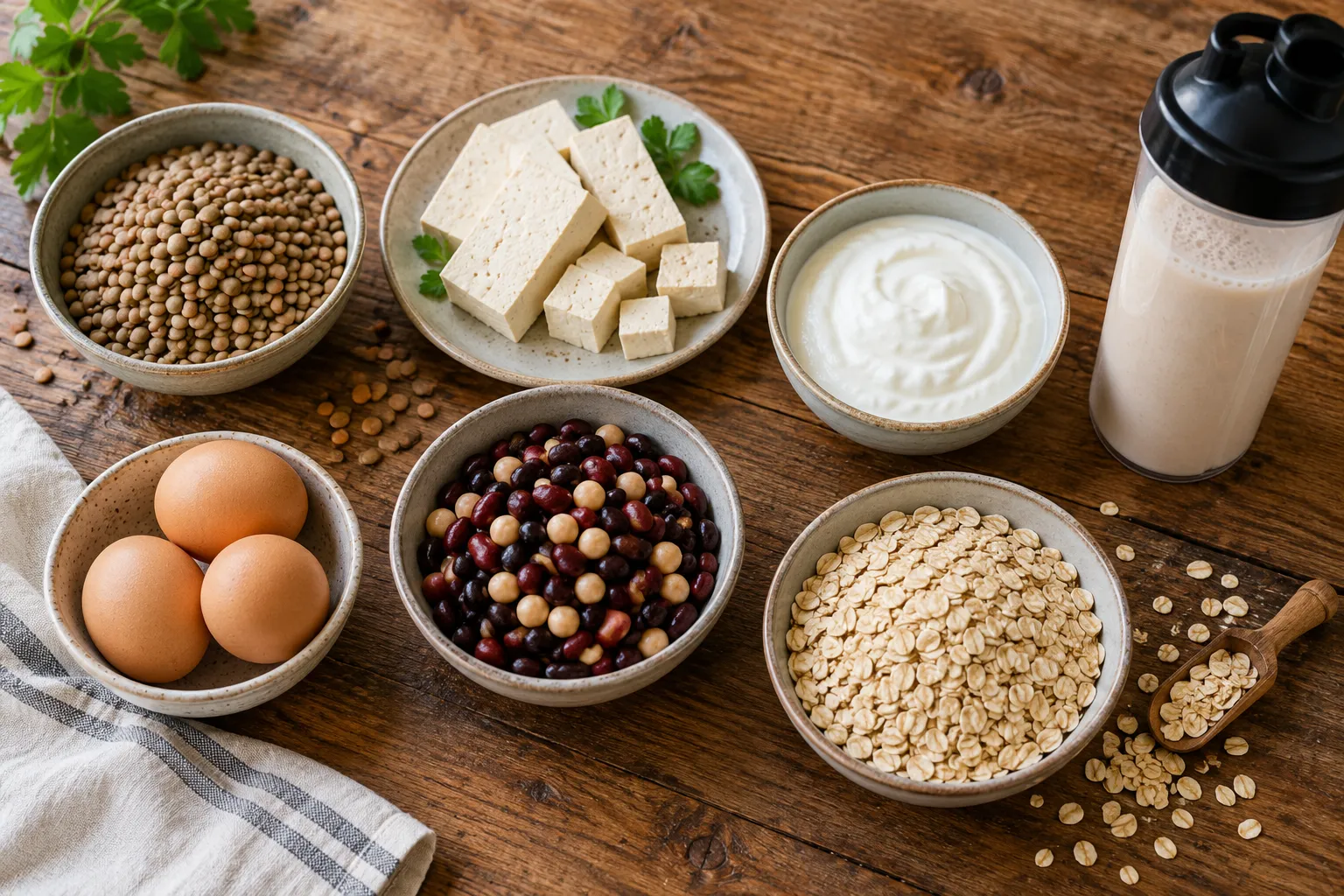
Whey and casein come from milk. Whey is commonly used in shakes and digests relatively quickly; casein is also a milk protein and is often used in thicker products. People with a milk-protein allergy should avoid them, and people with lactose intolerance may need to check how a product is made and how much lactose it contains.
Plant powders may use pea, soy, rice, hemp or a blend. Their amino-acid profiles vary, so a blend can be designed to provide a broader mix. “Plant-based” does not automatically mean lower quality, and “whey” does not automatically make a product suitable for every person.
The practical choice is the one a person can tolerate, afford and use consistently. A product that tastes good but causes symptoms is not a good fit; a technically impressive product that stays unopened is not useful either.
How much protein is enough?
Protein needs depend on body size, age, health, activity, total energy intake and the goal of training. The NIH Office of Dietary Supplements notes that athletes may need more protein than the general population, while also emphasizing that food can often provide enough.
More is not automatically better. A powder should fill a gap in the day’s intake, not turn every drink into a high-dose supplement. A clinician or registered dietitian can help when the target is unclear, especially during illness, pregnancy, older age, weight loss or intensive training.
Read the label line by line
Start with the serving size, then compare the grams of protein per serving with the calories. Two tubs can both advertise “25 g protein” while using very different serving weights and adding different amounts of sugar, fat or carbohydrate.
Check the ingredient list for sweeteners, thickeners, caffeine, herbal blends and other extras that were not part of the original goal. Look for milk, soy, egg or other allergens. If independent quality testing is important to you, look for clear information about who tested the product and what the certification covers; a vague badge is not the same as transparent testing.
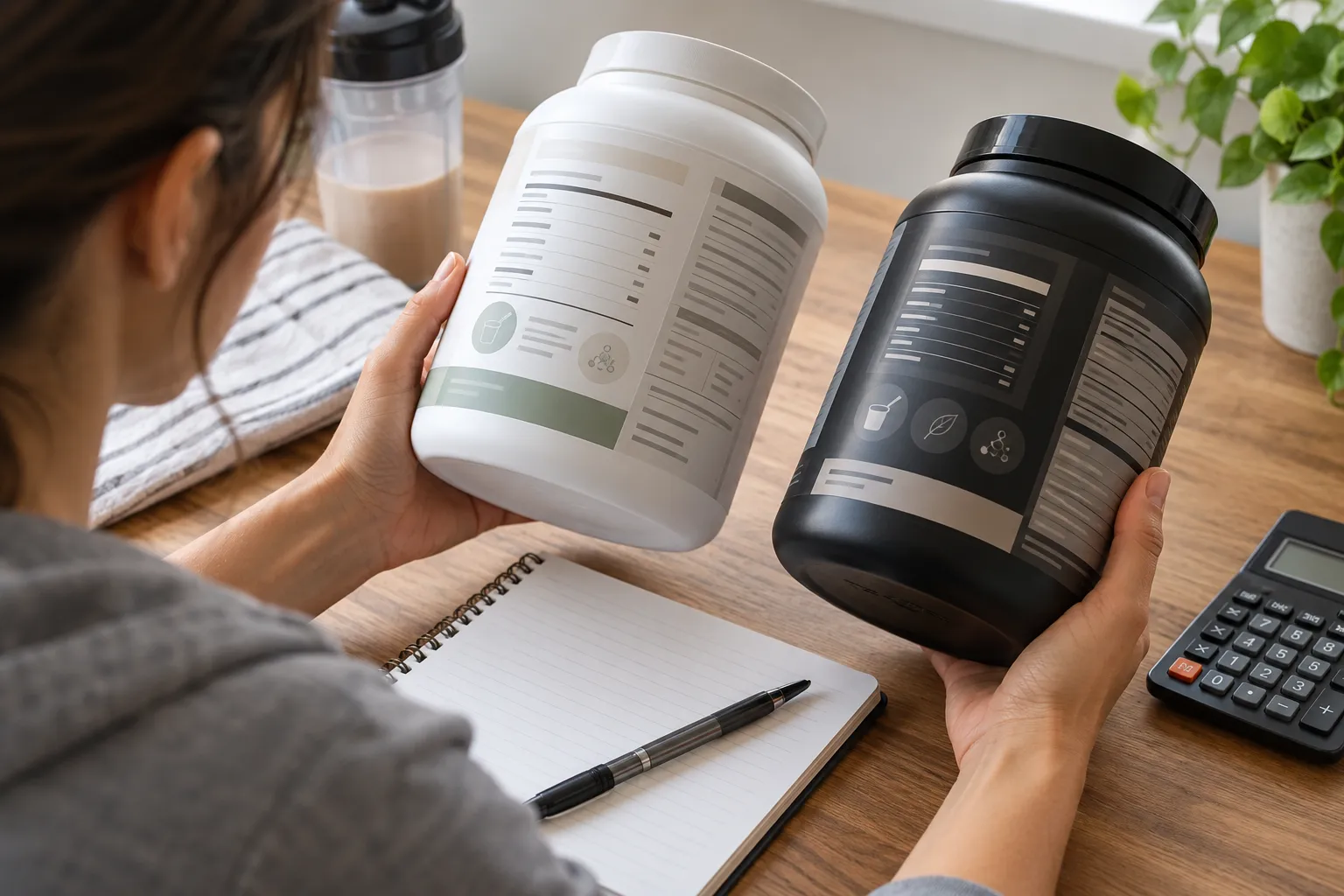
The front of a package is advertising space. The Supplement Facts panel and ingredient list answer more useful questions: how much is in a serving, what else is included and whether the product fits the person’s diet.
Timing and the post-workout myth
A shake after training can be convenient, but there is no need to treat a narrow post-workout window as a deadline. Regular meals and the overall daily protein pattern matter more than rushing to drink a product immediately after the last set.
For someone who trains early and cannot eat a meal, a shake may be practical. For someone who is about to have a normal meal, it may add cost and calories without solving a real problem. The best timing is the one that supports the person’s routine and total intake.
Digestion, allergies and safety
Bloating, diarrhoea, cramps or nausea can come from lactose, sweeteners, large portions, added ingredients or simply a product that does not suit the person. Lowering the serving, changing the formulation or choosing a food source may help, but persistent symptoms deserve professional advice.
People with kidney disease, a diagnosed medical condition, pregnancy, a history of eating-disorder treatment, a milk or soy allergy, or a complex medication list should ask a qualified professional before using a high-protein supplement. Supplements can interact with medicines, and the FDA does not approve dietary supplements for safety and effectiveness before they reach the market.

A simple buying checklist
Before buying, ask:
- What protein gap am I trying to fill?
- Could a normal meal or snack do the same job?
- How many grams of protein and calories are in one clearly defined serving?
- What sweeteners, stimulants, herbs or other extras are included?
- Does it contain an ingredient or allergen I need to avoid?
- Is the quality or independent testing information specific and verifiable?
- Do my health conditions or medicines make professional advice important?
The bottom line
Choose protein powder for convenience, not because the packaging makes it sound indispensable. Compare like with like, keep the ingredient list understandable, and judge the product by whether it fits the person’s diet, tolerance and reason for using it.
For many people, the strongest option is not a special formula. It is a simple product—or no powder at all—inside an eating pattern that already provides enough protein.
Common questions
Do I need protein powder to build muscle?
No. Training, total food intake and adequate protein matter; a powder is mainly a convenient way to add protein when food is impractical or appetite is low.
Is whey better than plant protein?
Not universally. Whey is a complete milk protein, while plant products vary by source and formulation. Choose the option that fits your dietary pattern, tolerance, budget and total protein intake.
When should I take a protein shake?
There is no magic minute. A shake can be useful around training or between meals, but the overall daily pattern is more important than a narrow timing rule.
What should I look for on a protein powder label?
Check serving size, grams of protein, calories, added sugar, ingredients, allergens and any independent testing or quality information. Compare like with like.
Can protein powder be harmful?
Some people may have allergy, lactose, gastrointestinal or medication-related concerns, and products vary in quality. People with kidney disease or a complex medical history should ask a qualified professional first.
Sources
- NIH Office of Dietary Supplements. Dietary Supplements for Exercise and Athletic Performance — Consumer.
- NIH Office of Dietary Supplements. Dietary Supplements for Exercise and Athletic Performance — Health Professional.
- NIH Office of Dietary Supplements. Dietary Supplements: What You Need to Know.
- British Journal of Sports Medicine / PubMed. A systematic review, meta-analysis and meta-regression of the effect of protein supplementation on resistance training-induced gains.
- U.S. Food and Drug Administration. FDA 101: Dietary Supplements.
This article is for general information and isn’t a substitute for personal medical advice. If you have health concerns, speak to a qualified professional.