
Iron is often presented as a simple answer to tiredness: feel drained, take iron, get your energy back. The real decision is more careful. Iron is essential for haemoglobin and oxygen transport, but fatigue has many possible causes, and taking extra iron without knowing the context can create new problems.
The useful question is not “which iron supplement is strongest?” It is “is low iron part of my situation, what caused it, and what does a qualified professional recommend?”
What this guide covers
- what iron does;
- who may be more likely to have low iron status;
- the difference between low iron and anaemia;
- food, supplements and side effects;
- tests, causes, interactions and toxicity.
This is general information. It does not diagnose anaemia, interpret an individual blood test or give a personal dose.
What iron does
Iron is part of haemoglobin, the protein in red blood cells that carries oxygen. It is also involved in other cellular processes. When iron stores fall, the body may struggle to make enough healthy haemoglobin.
That can contribute to tiredness, weakness, shortness of breath or reduced exercise tolerance. But these symptoms can also come from sleep problems, infections, thyroid conditions, medication effects, stress and many other causes. A symptom is a reason to investigate, not proof that iron is the answer.
Who may be more likely to have low iron?
Risk depends on intake, absorption and loss. People with heavy menstrual bleeding, pregnancy-related needs, a diet low in iron-rich foods, digestive conditions or previous gastrointestinal surgery may have reasons to discuss iron status. Blood loss from the digestive tract is another context that should not be covered up with self-treatment.
Children are a special safety concern because accidental ingestion of iron products can be dangerous. Keep all supplements out of reach and seek urgent help after a suspected overdose.
Risk context is not a diagnosis. It tells you when proper history and testing may be more useful than buying a product based on an energy claim.
Low iron is not the same as anaemia
Iron deficiency can begin before iron-deficiency anaemia develops. Anaemia describes a problem with the blood’s oxygen-carrying capacity; iron deficiency is one possible cause, but not the only one.
That distinction matters because the cause may need attention. Replacing iron without investigating ongoing blood loss, absorption problems or another medical issue can leave the underlying problem unresolved.
Food and supplements
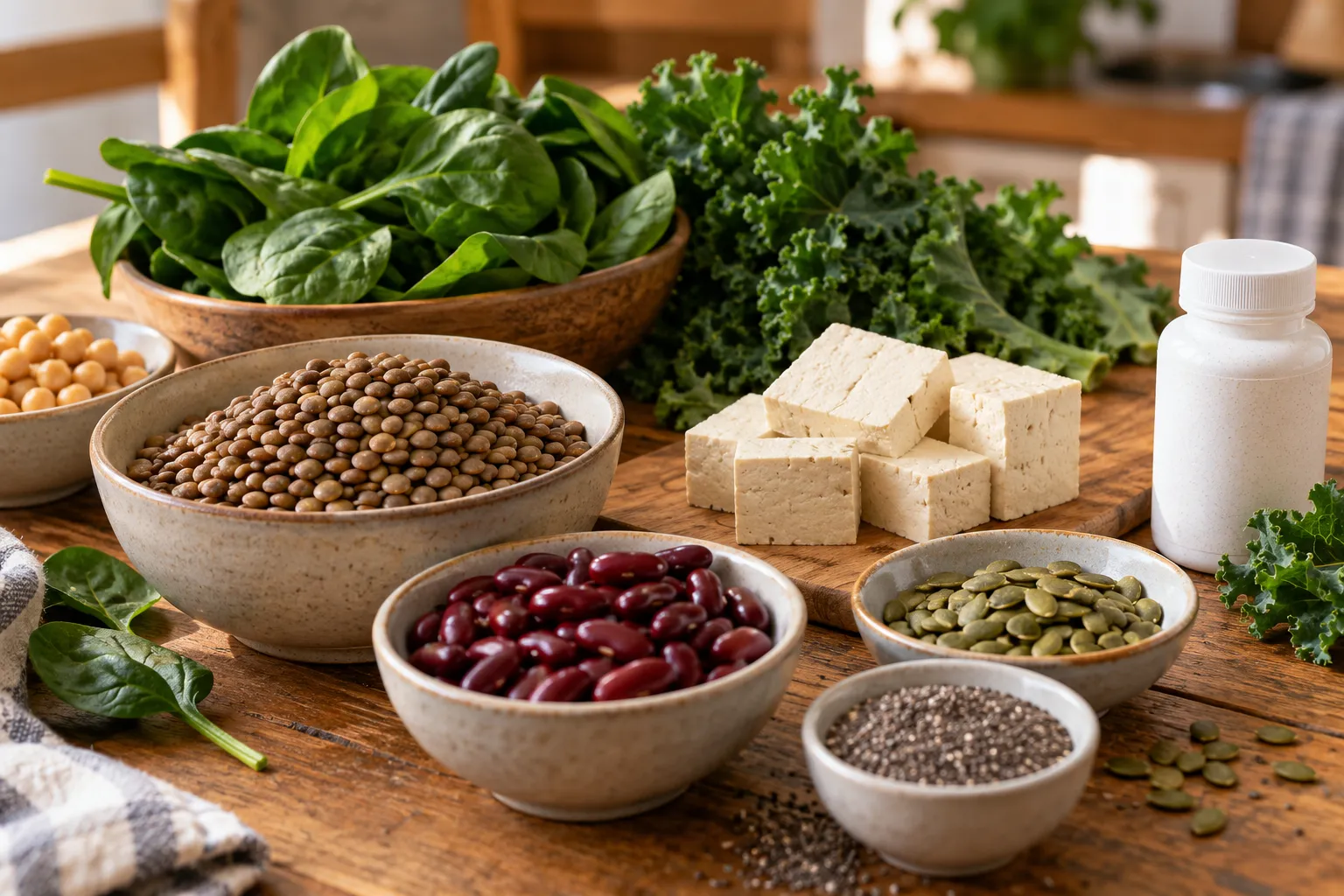
Meat, seafood, beans, lentils, tofu, nuts, seeds and some fortified foods can contribute iron. The amount absorbed depends on the food and the person’s physiology. A varied eating pattern is useful, but food advice cannot replace assessment when deficiency is suspected.
Iron supplements deliver a concentrated amount and can be appropriate in a clinician-guided plan. They can also cause nausea, constipation, abdominal discomfort or other gastrointestinal effects. The product label does not tell you whether iron is the right treatment for your situation.
What tests and symptoms can tell you
A clinician may consider a complete blood count, ferritin and other markers together with diet, symptoms, medicines and possible sources of blood loss. One number on a report is not a complete explanation, and reference ranges can vary by laboratory and context.

Do not use an iron supplement as a home diagnostic test. If symptoms persist, worsen or include breathlessness, chest discomfort, fainting, black stools or significant bleeding, seek appropriate medical care.
Side effects, interactions and toxicity
Iron can interact with medicines and can interfere with the absorption of some products when taken together. A pharmacist can help work through timing and interactions using the exact product list.
More iron is not automatically better. Excess iron can damage organs, and high amounts can be poisonous. This risk is especially important for children, who may mistake tablets for sweets. Store iron securely and follow urgent-care advice after accidental ingestion.
Common mistakes
- Treating fatigue as proof of iron deficiency.
- Confusing low iron with anaemia without checking the cause.
- Choosing a high-dose product because it promises fast energy.
- Ignoring heavy bleeding, digestive symptoms or possible blood loss.
- Stopping a prescribed medicine to make room for a supplement.
- Leaving iron products where children can reach them.
A practical checklist
Before starting or changing an iron supplement, ask:
- What makes iron deficiency plausible in my situation?
- Which tests were done, and how were they interpreted together?
- Does the cause of low iron need investigation?
- What medicines and supplements could interact with this product?
- How should I store it safely, especially around children?
The short verdict
Iron can be important when deficiency is confirmed, but it is not a general energy supplement. The safest path is to understand the blood results and the cause, then use a clinician-guided plan when treatment is needed. More is not automatically better.
For the wider vitamins and minerals context, continue with Vitamin B12 supplements: who is more likely to need one?.
Common questions
Should I take iron if I feel tired?
Not automatically. Fatigue has many possible causes, and iron deficiency needs appropriate history and testing rather than a guess based on symptoms alone.
What is the difference between low iron and anaemia?
Iron deficiency can exist before anaemia develops. Anaemia means the blood cannot carry oxygen as well as it should; the cause still needs to be understood.
Why do iron supplements upset the stomach?
Nausea, constipation, abdominal discomfort and other gastrointestinal effects can occur. A clinician or pharmacist can help with the product and plan rather than abandoning evaluation.
Can iron supplements be dangerous?
Yes. Excess iron can be harmful, and accidental ingestion by children is especially dangerous. Keep products out of reach and seek urgent help after a suspected overdose.
What should I ask about an iron blood test?
Ask which markers were measured, what they mean together, whether a cause needs investigation and whether medicines or supplements affect interpretation.
Sources
- NIH Office of Dietary Supplements. Iron — Health Professional Fact Sheet.
- NIH Office of Dietary Supplements. Iron — Consumer Fact Sheet.
- NIH Office of Dietary Supplements. Dietary Supplements: What You Need to Know.
This article is for general information and isn’t a substitute for personal medical advice. If you have health concerns, speak to a qualified professional.