
Desk days can make the hips, shoulders and upper back feel less ready to move. That feeling is a prompt to change position, not a reason to force a deep stretch. This ten-minute routine is a simple menu for a workday reset.
For the bigger picture, see the mobility and stretching guide. Here, the goal is narrower: use comfortable movement to interrupt a long spell of sitting.
If you can, stand up and change position during the day as well as doing this routine. A chair, a clear patch of floor and a resistance band are optional tools; none is essential.
The ten-minute routine
1. Easy standing reach — two minutes
Stand with your feet comfortable and let one arm reach overhead as you gently lengthen through the side of the body. Return to centre and switch sides. Keep the ribs relaxed and the range small enough that breathing stays easy.
2. Supported hip movement — two minutes
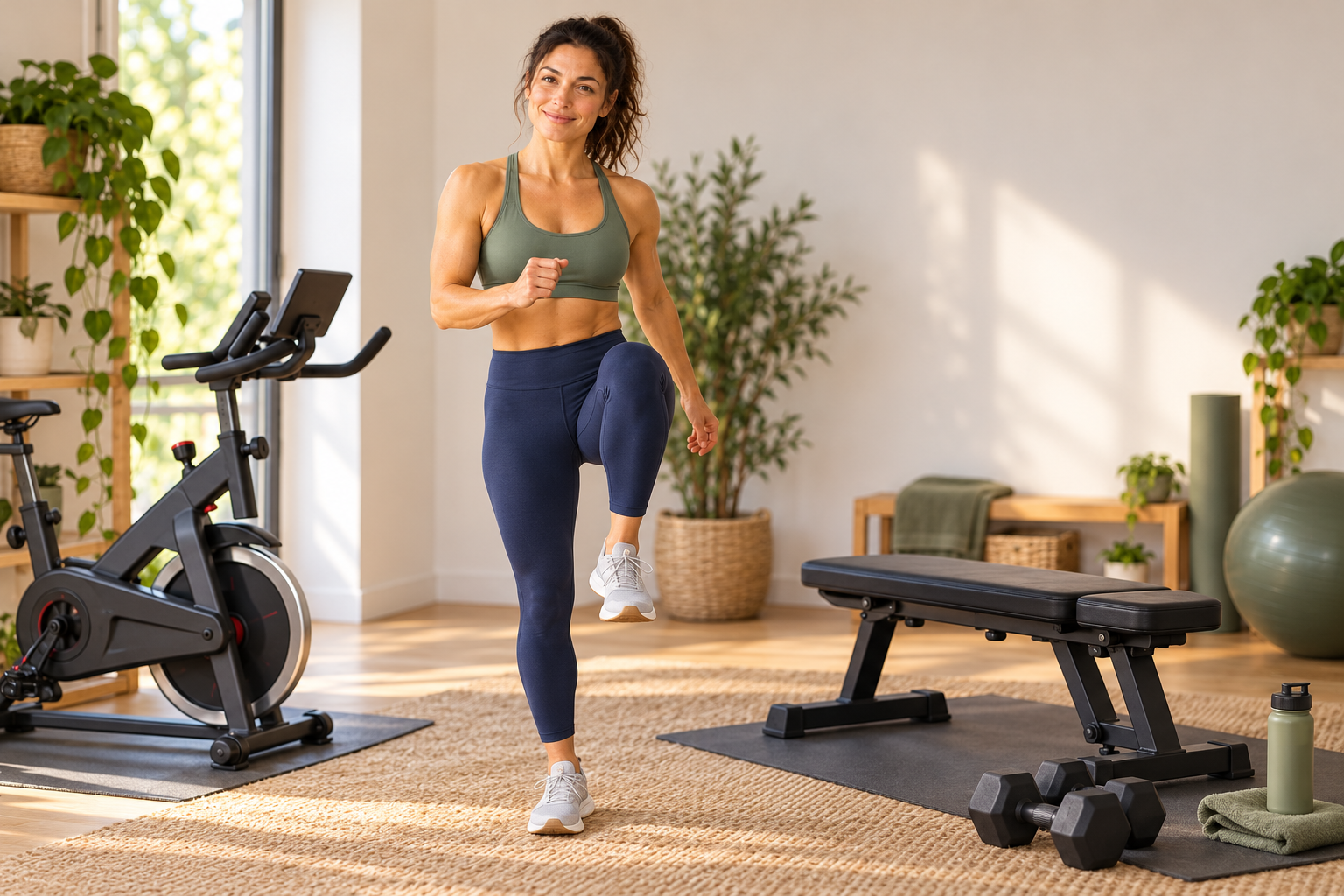
Hold a stable chair or desk. Slowly lift one knee a little, place the foot down and switch sides. You can add a small hip extension by stepping one foot back, but do not push into a deep lunge or arch the lower back.

3. Upper-back and shoulder opener — two minutes
Hold a light resistance band with both hands, or simply reach the arms forward without equipment. Open the hands a little wider while keeping the shoulders relaxed, then return. The movement should be slow and controlled rather than a hard pull.

4. Hip hinge and sit-to-stand — two minutes
Place your hands on your thighs and send the hips back slightly, keeping the spine long. If a chair is behind you, practise one or two slow sit-to-stands with control. Use the chair for support if balance is uncertain, and stop before fatigue changes your form.
5. Walking or ankle break — two minutes
Finish by walking around the room, marching gently or making a few controlled ankle movements while holding a support. The purpose is to leave the desk position and let the whole body move, not to turn the break into cardio training.
Make it work on a real workday
The routine is easier to repeat when it is attached to an existing cue: after a meeting, before lunch or when you refill your water. You can also split the ten minutes into two five-minute blocks. A short walk and a change of position may be more useful than waiting for a perfect uninterrupted session.
Keep the setup safe. Move the chair onto a stable surface, leave room around the desk and avoid using a rolling chair as a balance point. If you work from home, a mat, light band and small dumbbells can stay nearby, but equipment should not become a reason to skip the break.
When to stop
Mobility work should not create sharp pain, numbness, tingling, weakness, unusual swelling or a feeling that a joint is unstable. Stop and seek appropriate advice if symptoms are severe, worsening, persistent or affecting normal activity. A general article cannot assess an individual injury or condition.
The bottom line
Use ten minutes as a practical reset: change position, move the hips and shoulders through a comfortable range, then walk for a moment. The most useful routine is the one that fits your desk day and can be repeated without forcing the body.
Common questions
Is this routine a replacement for taking breaks from sitting?
No. It is better used alongside regular position changes, short walks and a workspace that lets you move comfortably. The exact timing can fit your day.
Do I need equipment for a 10-minute mobility routine?
No. A clear floor and a stable chair are enough. A resistance band can add an option for the shoulders, but it is not required.
Should mobility work feel intense?
It should feel controlled and comfortable, not sharp or forced. Reduce the range, slow down or choose another movement if the sensation becomes uncomfortable.
Can I do this routine if I have pain?
Do not use a general routine to self-treat unexplained or worsening pain. Stop if symptoms increase and ask a qualified clinician which movements are appropriate for you.
How often should I use a desk-day mobility break?
Use brief movement breaks when they fit your schedule. Consistency and comfort matter more than chasing a fixed number of sessions.
Sources
- Centers for Disease Control and Prevention. Physical Activity Guidelines for Americans, 2nd edition.
- PubMed. Sitting time and all-cause mortality risk.
- PubMed. The effects of workplace interventions on sedentary behaviour and physical activity.
This article is for general information and isn’t a substitute for personal medical advice. If you have health concerns, speak to a qualified professional.