import hingeImage from ‘../../../assets/images/fit-mob-s1/fit-mob-s1-body-01-hip-hinge.png’; import rockBackImage from ‘../../../assets/images/fit-mob-s1/fit-mob-s1-body-02-rock-back.png’; import shouldersImage from ‘../../../assets/images/fit-mob-s1/fit-mob-s1-body-03-shoulders.png’;
Many people feel less mobile when they first get out of bed. That does not mean the body needs to be forced open. A few minutes of comfortable movement can be a useful transition from sleep to the day, especially if you spend long periods sitting afterwards.
For the broader explanation of mobility and stretching, see the mobility and stretching guide. This article focuses on a short morning routine.
The routine below is a menu, not a test. Move within a range that feels calm, breathe normally and stop if the sensation becomes sharp.
A five-minute sequence
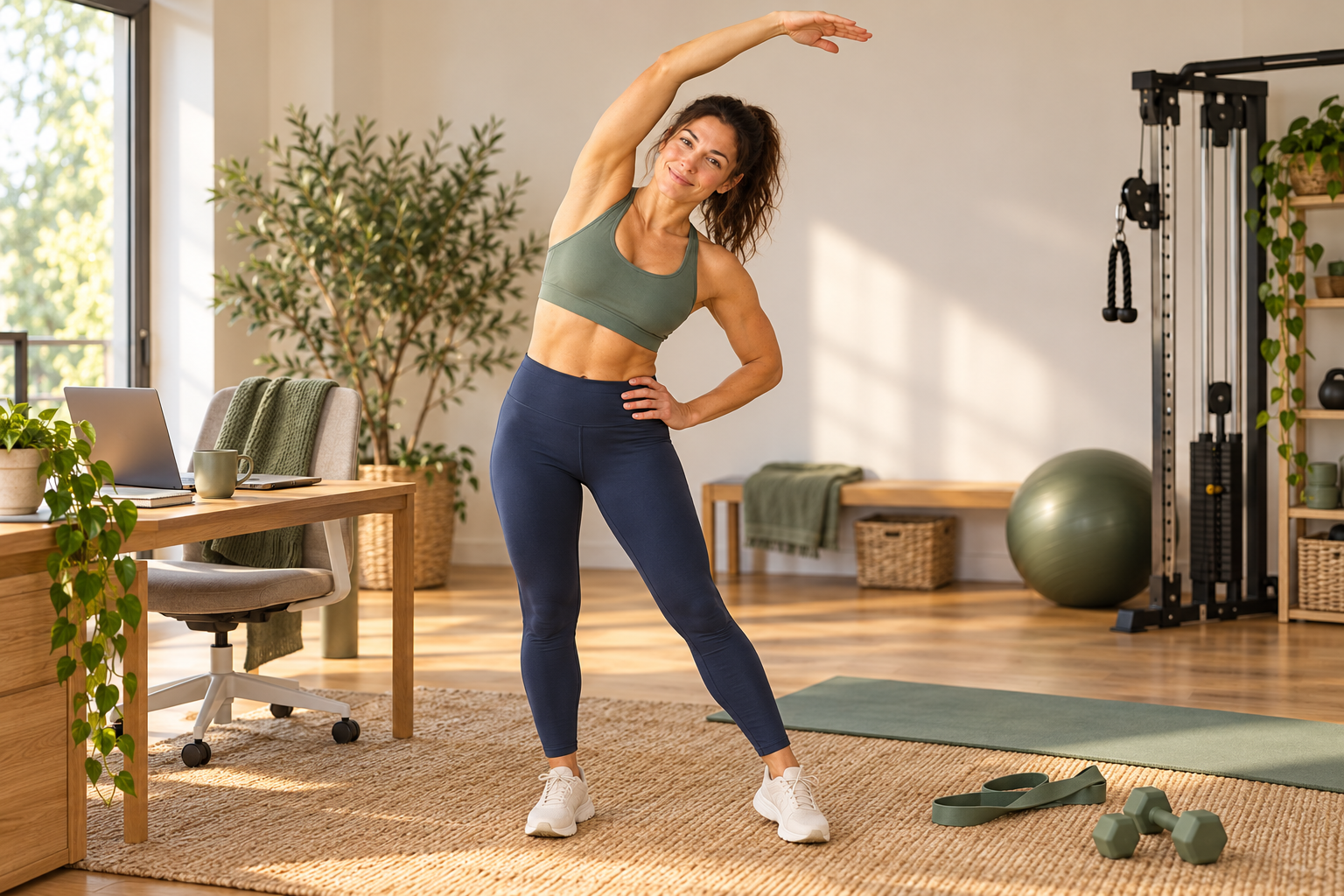
1. Easy standing reach — one minute
Stand with your feet comfortable and let the arms rise overhead only as far as the shoulders allow. Lower them slowly. Repeat with relaxed breathing rather than holding the end position.
2. Hip hinge — one minute
Place the hands on the thighs and push the hips back a small amount, keeping the spine long. Return to standing. This rehearses a useful everyday pattern without demanding a deep stretch.
3. Quadruped rock-back — one minute
On hands and knees, slowly move the hips toward the heels and return. Keep the range comfortable and let the spine move naturally. A folded towel under the knees can make the position easier.
4. Shoulder circles — one minute
Make slow circles with the shoulders, then gently turn the head from side to side without forcing the neck. Keep the jaw and hands relaxed.
5. Easy walking — one minute
Walk around the room or outside at an ordinary pace. Notice whether the hips, back and shoulders feel more ready for the day. The goal is not to create a strong stretch sensation.
Why mornings can feel different
Stiffness can reflect time spent still, a new training load, a sleep position or ordinary variation. It is useful information, but it is not enough by itself to identify a cause. If stiffness is severe, keeps returning with pain, limits daily activity or comes with weakness, numbness or swelling, seek professional advice.
What mobility can and cannot promise
Stretching and mobility work can improve flexibility and help a person access a more comfortable range of motion. Public guidelines describe flexibility as an appropriate part of physical activity, while also noting that its independent health benefits and injury-prevention effects are not fully established.
There is also no good reason to believe that morning exercise is automatically better than movement later in the day. The best time is the one that fits the person’s routine and can be repeated.
The bottom line
Use five minutes of gentle movement to transition into the day, not to punish stiffness or chase an extreme range. Keep the routine comfortable, repeat it when it feels useful, and treat persistent or worrying symptoms as a reason for assessment rather than more stretching.
Common questions
Why do I feel stiff in the morning?
Time spent still, sleep position, recent training and ordinary day-to-day variation can all influence how movement feels. Persistent or concerning stiffness deserves assessment.
Do I need to stretch every morning?
No. A short walk, normal daily movement or a few gentle mobility drills may be enough. Choose what feels useful and sustainable.
Can morning mobility prevent injuries?
Mobility can help you practise comfortable range of motion, but evidence does not support promising that stretching alone prevents injuries.
How long should each movement last?
Move slowly for a few breaths or repetitions. Stop before pain, shaking or forced end-range effort appears.
What if the routine causes pain?
Stop the movement and reduce the range or choose an easier option. Seek qualified advice for sharp, worsening or persistent symptoms.
Sources
- Centers for Disease Control and Prevention. Physical Activity Guidelines for Americans, 2nd edition.
- PubMed. Acute effects of muscle stretching on physical performance, range of motion, and injury incidence.
- PubMed. Timing of physical activity within the 24-hour day and its influence on health.
This article is for general information and isn’t a substitute for personal medical advice. If you have health concerns, speak to a qualified professional.