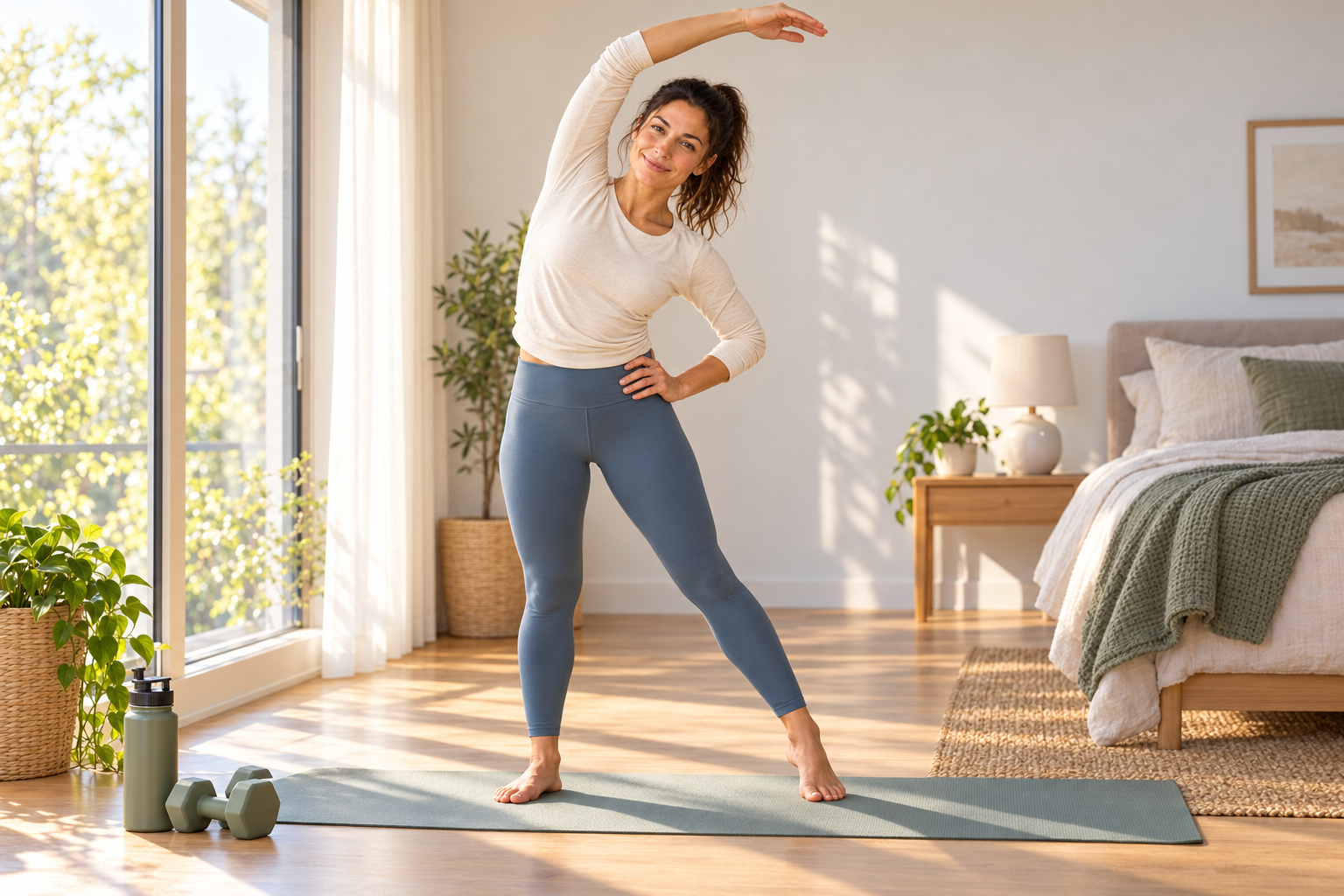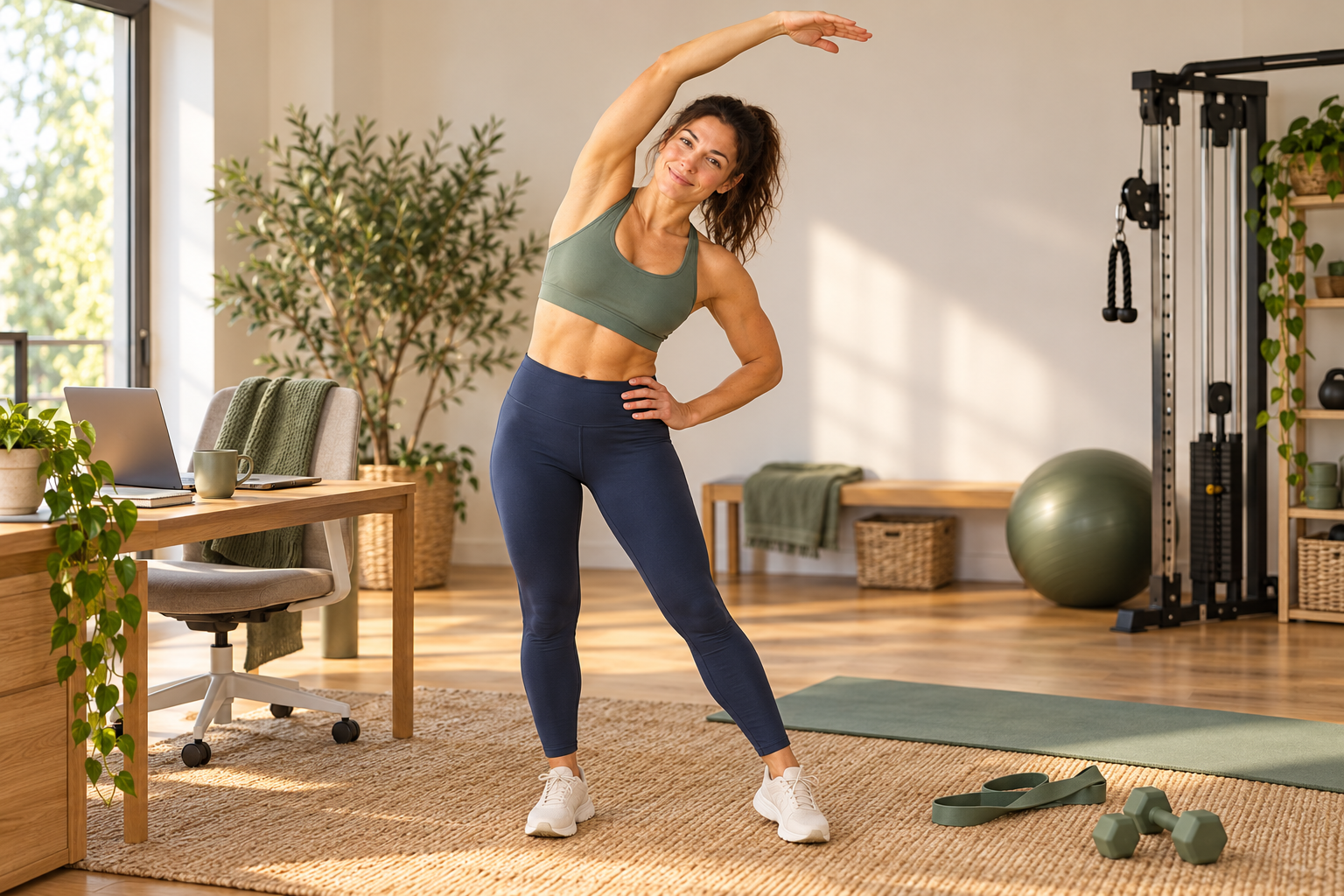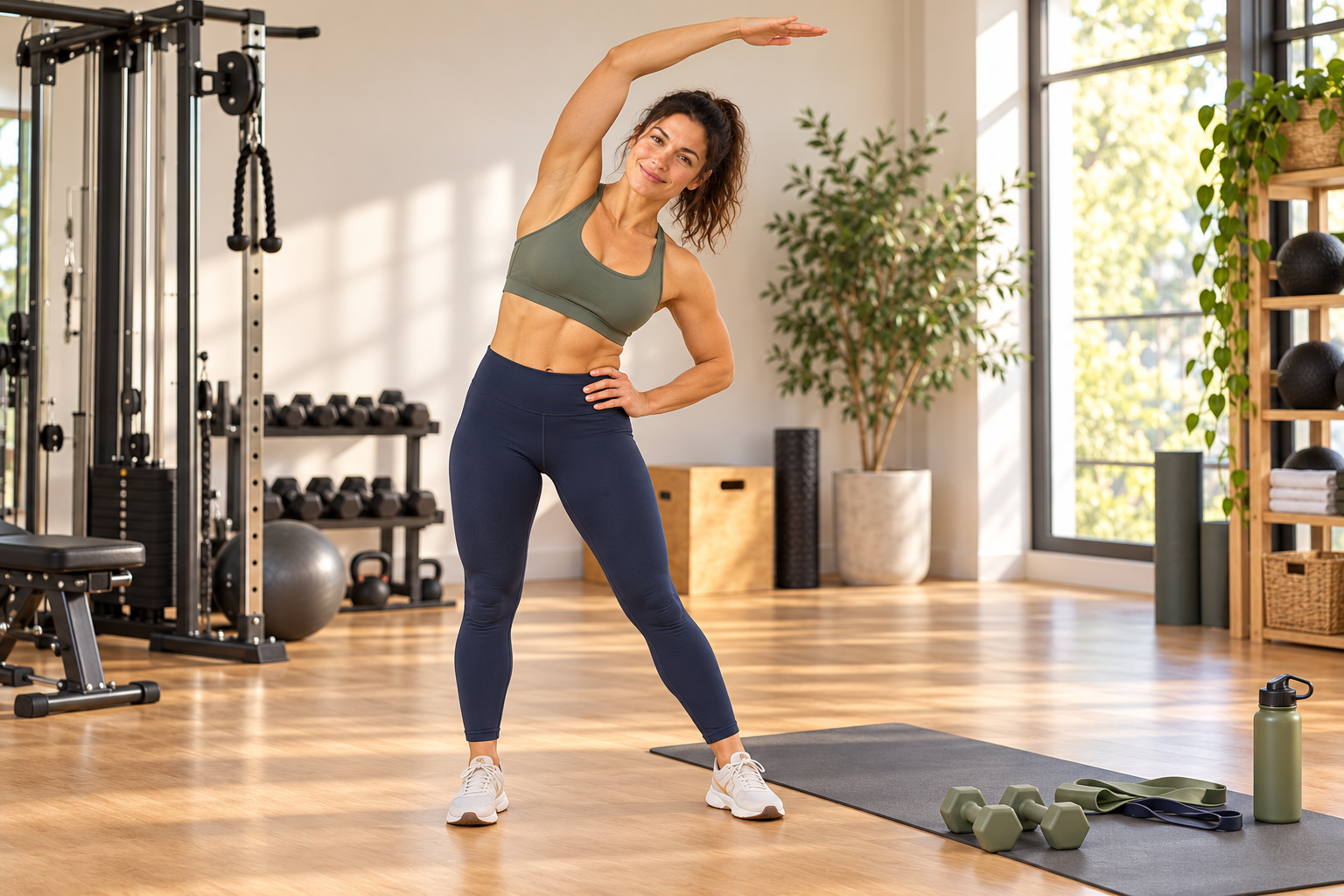
Mobility, flexibility and stretching are often treated as the same thing. They overlap, but separating them makes a routine easier to choose. Flexibility is the available range. Mobility is how comfortably and controllably you use that range. Stretching is one tool that may help you explore or maintain it.
This is the starting point for the Fitness mobility topic. The aim is not to force a new range overnight. It is to make everyday movement and exercise feel more comfortable and controlled.
Mobility is more than holding a stretch
A long stretch can feel pleasant, but it does not automatically teach you to control the whole range during a squat, lunge, reach or turn. Mobility practice often uses slow, active movement: you enter a comfortable range, pause or move through it, then return with control.
That does not make static stretching useless. It can be a practical choice when a particular muscle group feels restricted or when you enjoy a calm flexibility session. It is simply one part of a broader movement plan.
Before exercise: prepare rather than force
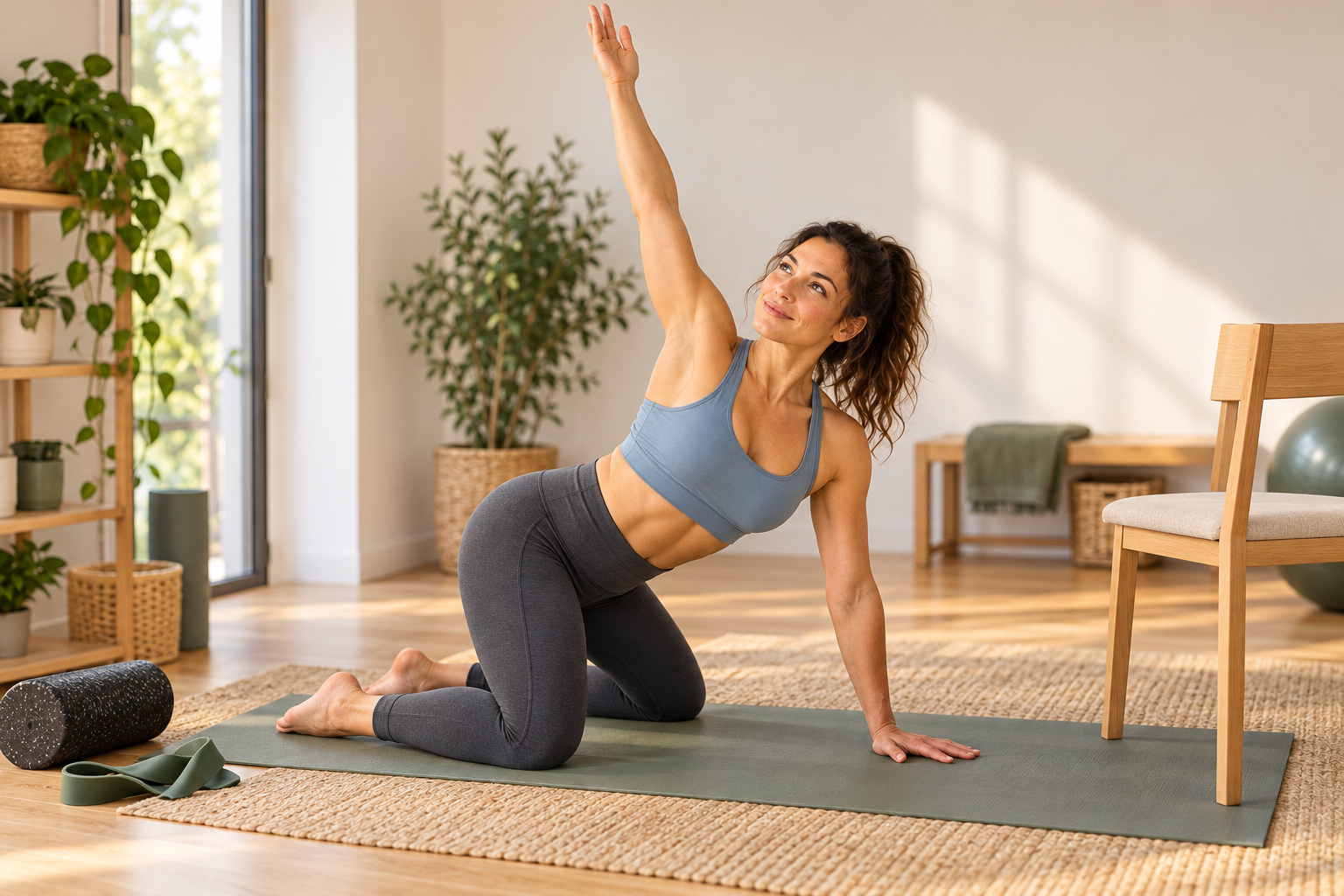
Before walking, running or strength work, start with a few minutes of easy movement that resembles what you are about to do. You might walk, move your shoulders, practise gentle hip hinges or take the first repetitions through a smaller range.
The goal is to raise readiness, not to prove how flexible you are. Avoid bouncing, forcing a joint to an end position or holding a painful stretch before a demanding session.
After exercise or on a separate day
Longer, relaxed stretches may fit after exercise or in a separate short session. Breathe normally, keep the intensity mild to moderate and come out of the position if pain, tingling, numbness or joint pressure appears.
You do not need a complicated sequence. Two or three movements for areas that feel relevant to your day can be enough. Repeat them regularly and notice whether the range feels easier to use over time.
A simple five-minute mobility start
Try this gentle sequence once or twice, moving slowly and staying in a range you control:
- Shoulder circles: make small circles, then gradually make them a little larger if they stay comfortable.
- Upper-back turns: sit or stand tall and rotate gently from side to side without forcing the neck.
- Supported hip hinge: keep your feet steady, send the hips back and return to standing with a long spine.
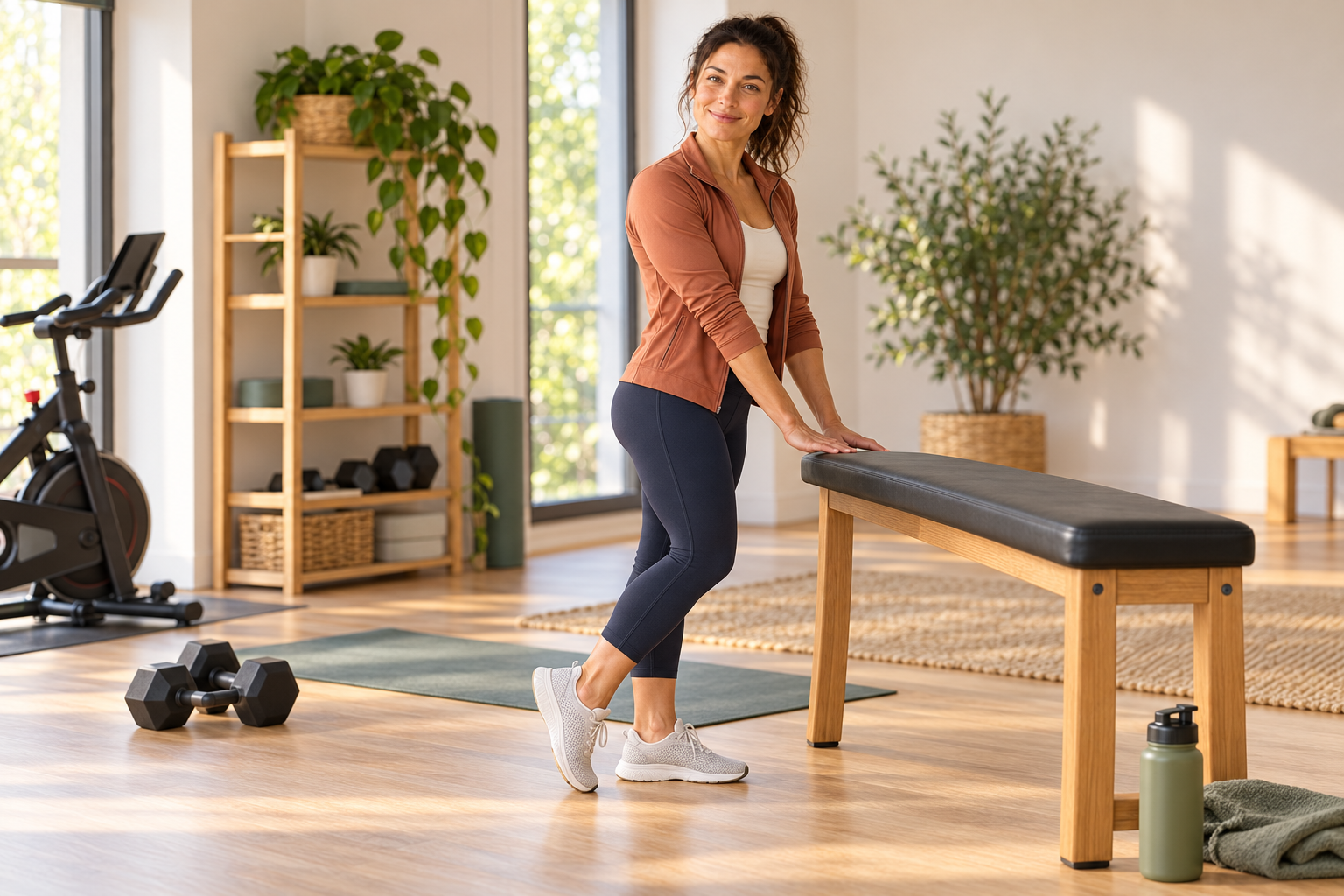
- Ankle rocks: hold a stable support and move one knee forward over the foot while keeping the heel grounded.
- Easy walk: finish with one or two minutes of comfortable movement.
Use fewer repetitions if you are stiff, tired or returning after a break. The smallest version you can repeat is a useful starting point.
How equipment can help
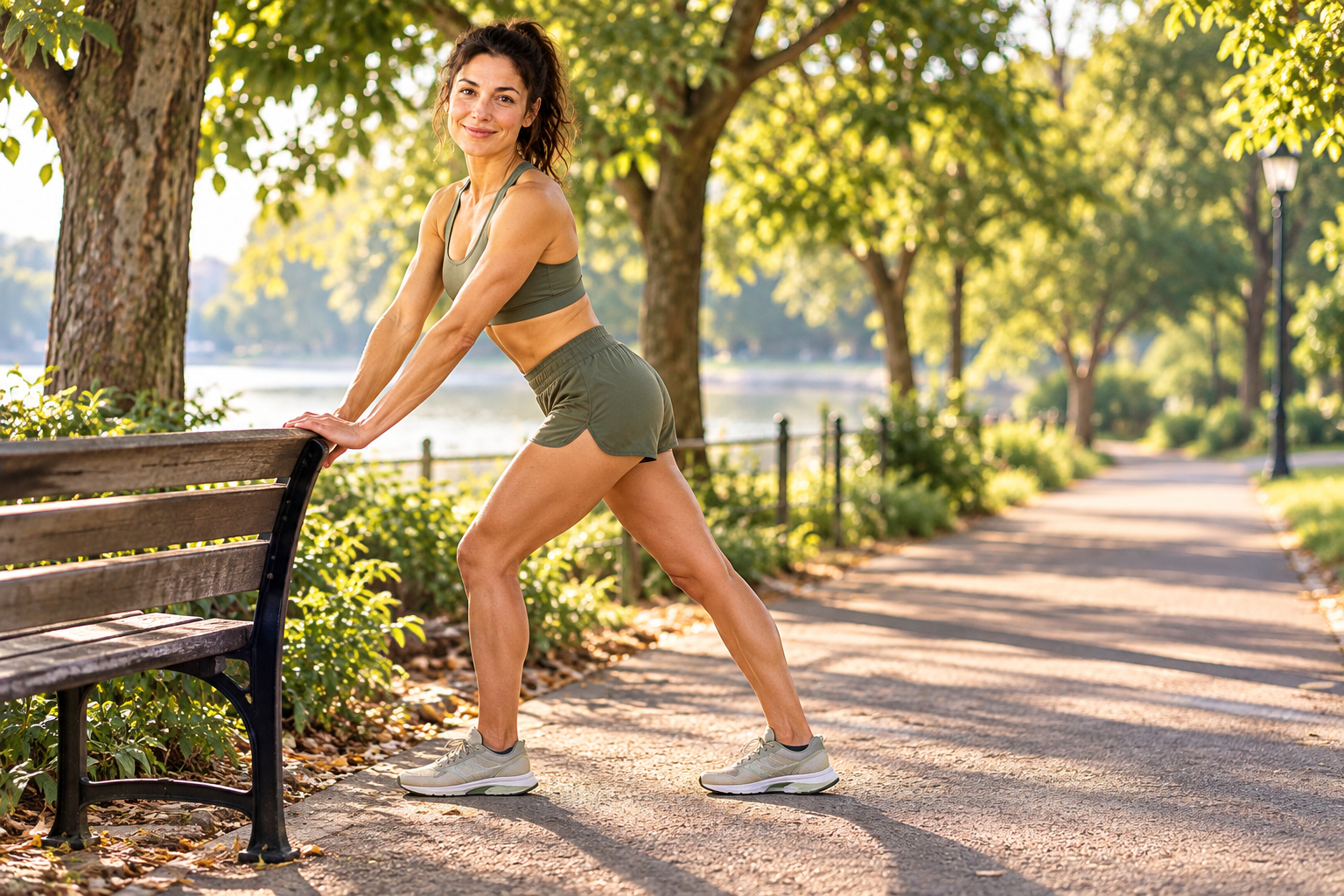
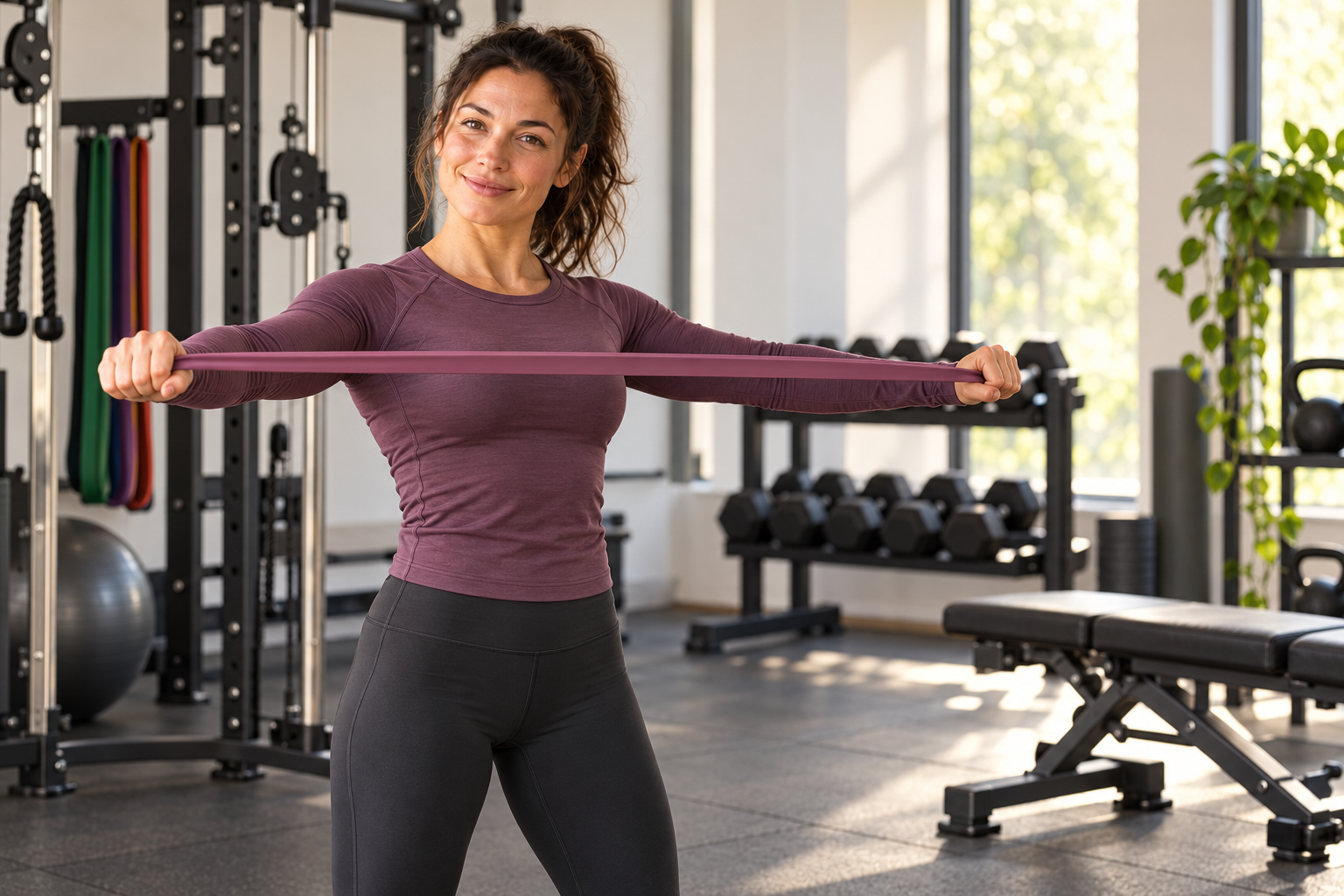
You do not need equipment for mobility, but tools can make the setup easier. A mat gives you a stable surface. A resistance band can provide light feedback during shoulder or hip movements. A sturdy chair or bench can improve support. A cable machine or light dumbbell can be used for controlled strength through a range, but it should not turn a mobility session into a heavy workout.
Choose the tool that improves control, not the one that makes the position look more advanced. Machines and accessories are options, not requirements.
What to expect from consistency
Range of motion can change with temperature, stress, sleep, recent training and how familiar a movement feels. A session that feels stiff today is not proof that your body is failing. Use a comfortable baseline and look for gradual changes in ease, control and confidence.
If a movement is consistently limited, painful or associated with swelling, weakness, numbness or a change after an injury, stop treating it as a normal flexibility problem and seek appropriate professional advice.
Stretching myths to leave behind
- “More discomfort means more progress.” Not necessarily. Intensity is not the same as useful adaptation.
- “One perfect routine works for everyone.” Your activities, history, equipment and tolerance change what is appropriate.
- “Stretching alone prevents injury.” Injury risk is influenced by training load, technique, recovery, environment and many other factors.
- “You must stretch every day.” A regular, manageable practice is more useful than a rule that makes you stop altogether.
When to ease off
Stop a movement that produces sharp pain, joint pressure, tingling, numbness, dizziness or a feeling of instability. Do not use stretching to push through an injury or to replace assessment when symptoms persist.
For general stiffness, reduce the range, slow down, use support or choose a different movement. Mobility should leave you feeling more prepared, not threatened by the next repetition.
Frequently asked questions
Is mobility work useful for beginners?
Yes. Gentle controlled movement can help beginners become more familiar with positions and build confidence. It does not need to be advanced to be useful.
How long should I hold a stretch?
There is no single hold time that fits every goal. Keep the position comfortable, breathe normally and use a duration you can repeat without pain or loss of control.
Should I stretch a sore muscle?
Gentle movement may feel comfortable, but do not assume soreness is a reason to push harder. Reduce training load, use easy movement and seek advice if pain is severe, unusual or persistent.
Sources
- Mayo Clinic: Stretching
- Harvard Health: The ideal stretching routine
- Cleveland Clinic: How to Improve Flexibility
- National Institute on Aging: Four Types of Exercise
This article is for general education and is not a diagnosis or a personalised training prescription. If you have an injury, persistent symptoms or questions about starting exercise, speak with a qualified health professional.
Common questions
What is the difference between mobility and flexibility?
Flexibility describes how much range a tissue or joint can reach, while mobility includes how well you can control and use that range.
Should I stretch before exercise?
Use gentle movement and activity-specific preparation before exercise. Longer static stretches may be more comfortable after training or in a separate session.
Can stretching prevent soreness or injury?
Stretching can support range of motion and feel useful, but it is not a guarantee against soreness or injury. Training load, technique, recovery and context also matter.
This article is for general information and isn’t a substitute for personal medical advice. If you have health concerns, speak to a qualified professional.