Strength training has a reputation problem. It sounds like something for people who already look strong — heavy barbells, mirrors, complicated plans. In reality, the most useful version is quiet and ordinary: a few movements you repeat, a little more each week, at home or wherever suits you.
This guide is for complete beginners and for anyone coming back after a long break. It covers what to do, how much, and how to keep going once the novelty fades.
In this article
Why strength training matters
Muscle does more than lift things. It helps you climb stairs, carry shopping, get up from the floor and stay steady on your feet. Major public health guidelines, including those from the World Health Organization, recommend muscle-strengthening activity that works the major muscle groups on two or more days a week, alongside regular aerobic activity.
The good news for beginners is that early progress tends to come quickly. In the first weeks, much of the change is your body learning to coordinate movements more efficiently — which is why consistency matters far more than intensity at the start.
The five movements to learn first
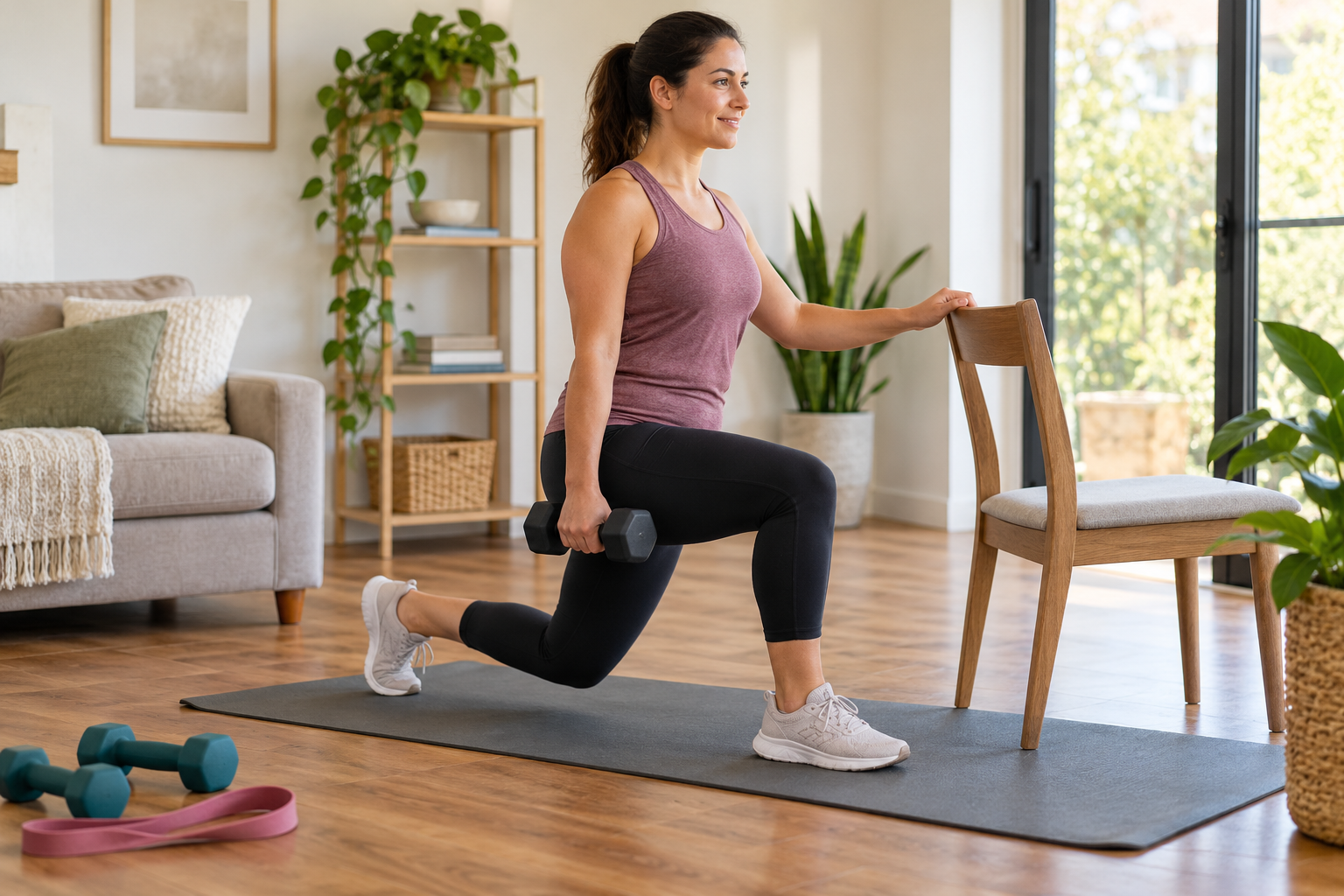
Almost every strength exercise is a variation of a few basic patterns. Learn these and you can build a complete routine with very little equipment.
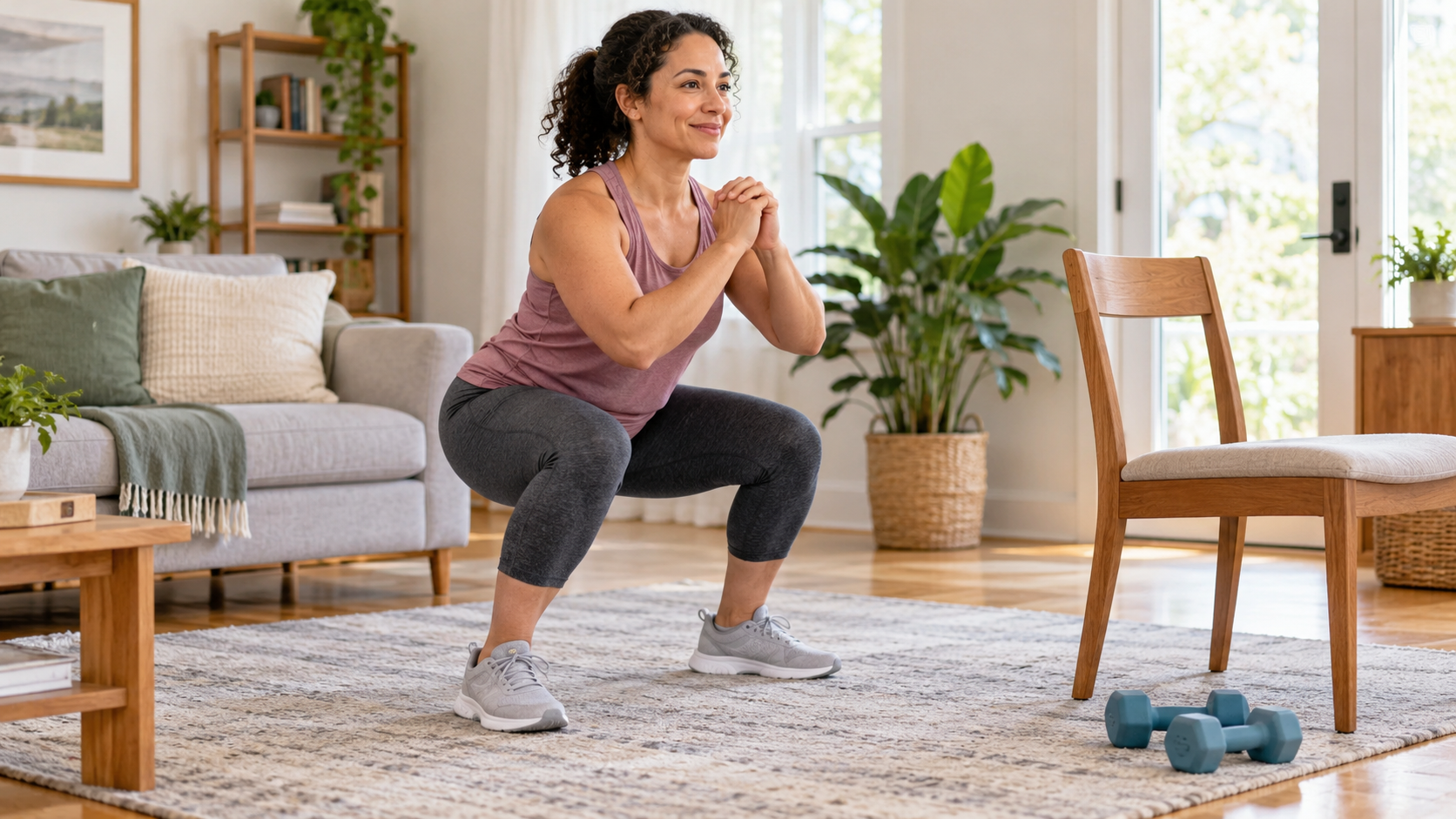
1. Squat
Sit back and down as if towards a chair, then stand up. Start with a box or chair behind you so you know where the bottom is.
2. Hinge
Push your hips back while keeping your back long, as if closing a drawer with your bottom. A dumbbell or kettlebell deadlift is the classic version.
3. Push
Press away from your body. Wall or incline push-ups are an excellent, adjustable starting point.
4. Pull
Draw something towards you. A one-arm dumbbell row, supported on a bench or chair, is easy to learn at home.
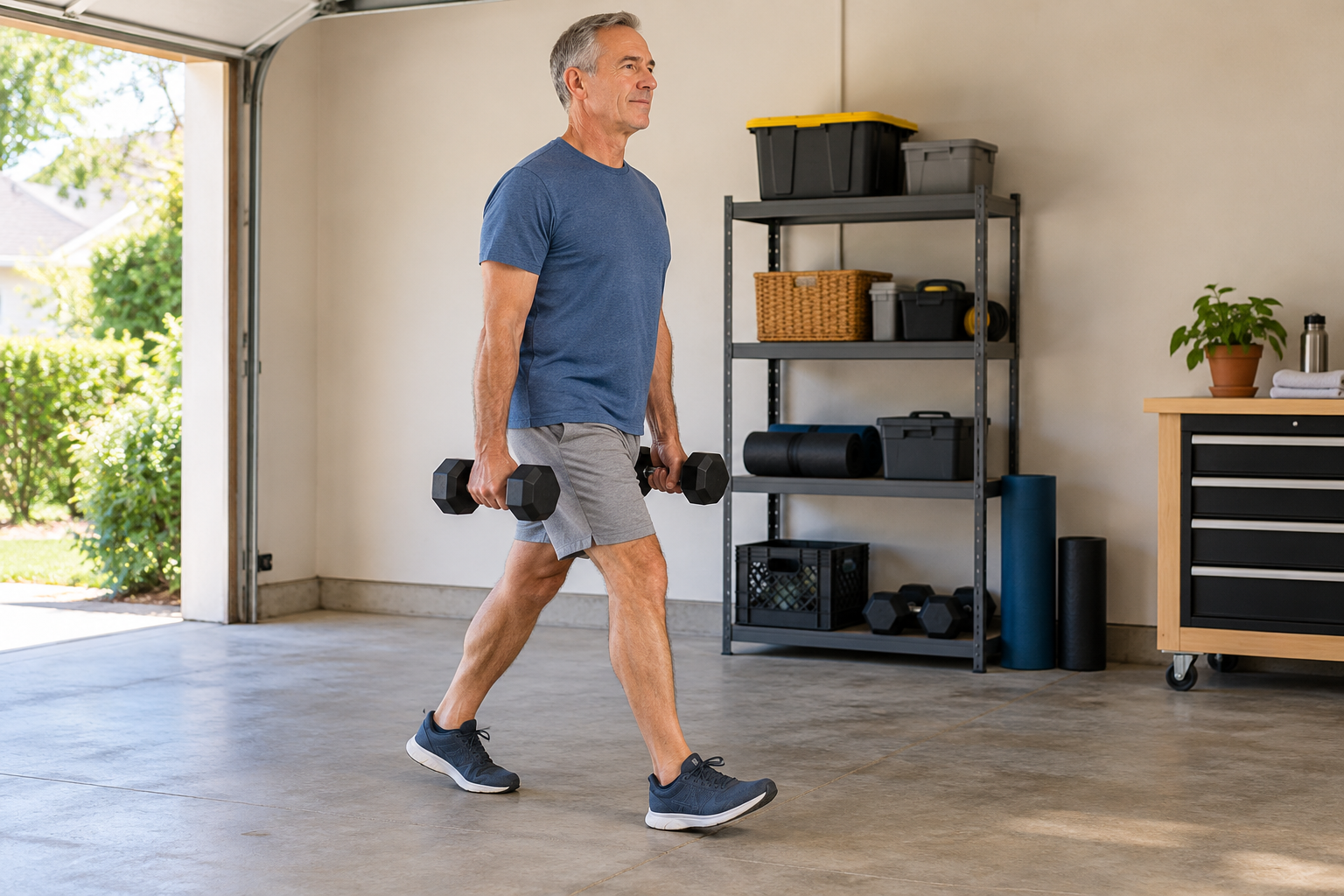
5. Carry
Pick up something heavy-ish and walk tall. Carries train grip, posture and the muscles around your trunk all at once.
How much, and how often
For most beginners, a sensible starting point looks like this:
- Frequency: two or three sessions a week, with a rest day between them.
- Volume: one to three sets of each movement.
- Reps: roughly 8–12 per set, with good control.
- Effort: stop each set with two or three reps “in the tank”.
A simple four-week starter plan
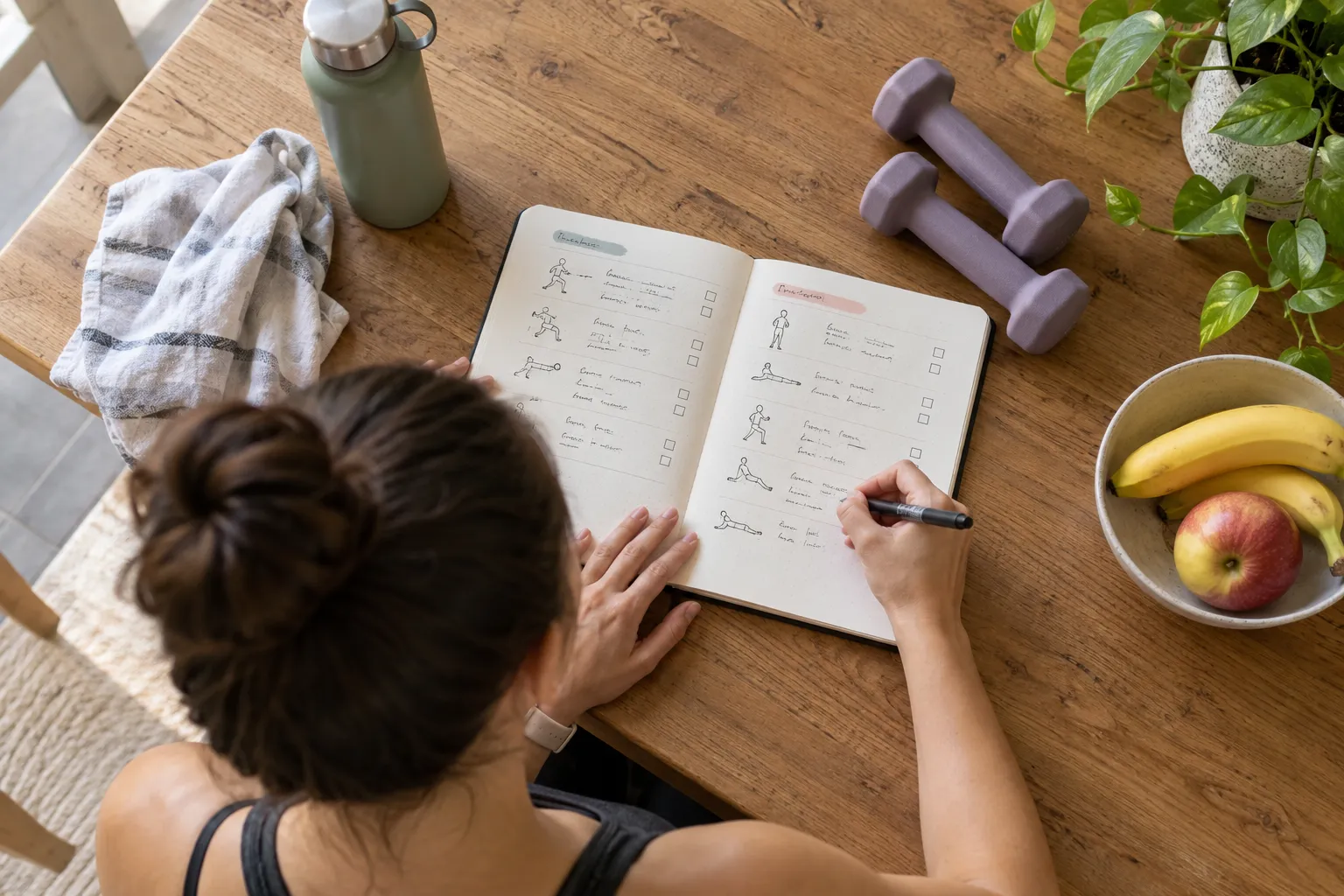
Repeat this full-body session two or three times a week. Keep the weights light enough that your form stays smooth throughout.
| Week | Sessions | Sets × reps | Focus |
|---|---|---|---|
| Week 1 | 2 | 1 × 10 of each movement | Learn the shapes; move slowly |
| Week 2 | 2 | 2 × 10 | Same weights, smoother reps |
| Week 3 | 2–3 | 2 × 12 | Add a few reps, keep control |
| Week 4 | 3 | 3 × 10 | Try slightly heavier weights |
How to progress safely
Progression is what turns a routine into training. The rule is simple: change one thing at a time, and only when the current level feels comfortable for a full week.
- Add one or two reps to each set.
- Then add a set.
- Then increase the weight slightly and drop back to fewer reps.
Some muscle soreness a day or two after a new session is common. Sharp pain, or pain in a joint that doesn’t settle, is a signal to stop and get it checked.
Common questions
Do I need a gym to start?
No. Bodyweight movements and a pair of dumbbells are enough for the first months. A gym becomes useful later if you want heavier weights or more variety.
Will strength training make me bulky?
Building large amounts of muscle takes years of deliberate training and eating to match. A few sessions a week will make you stronger and more capable, not unrecognisable.
How long until I notice a difference?
Many beginners notice movements feeling easier within a few weeks. Visible changes usually take longer and vary a lot from person to person.
Sources
- World Health Organization. WHO guidelines on physical activity and sedentary behaviour. 2020.
- Centers for Disease Control and Prevention. What Counts as Physical Activity for Adults.
- Office of Disease Prevention and Health Promotion. Physical Activity Guidelines for Americans, 2nd edition.
This article is for general information and isn’t a substitute for personal medical advice. If you have health concerns, speak to a qualified professional.