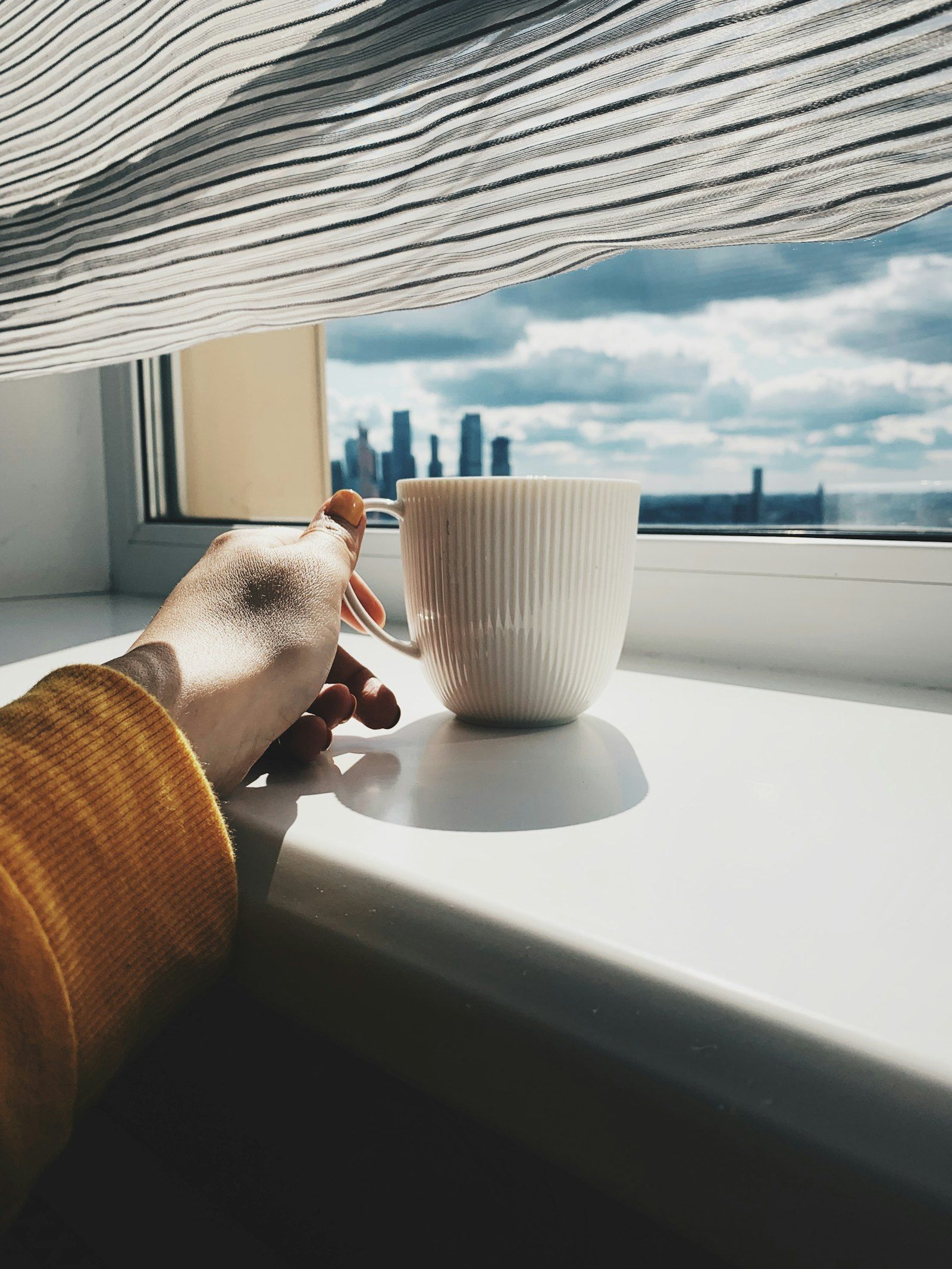
Coffee in the morning, tea in the afternoon, a drink with dinner: these choices can feel ordinary while still shaping the night. The effect is not identical for everyone, which is why the most useful approach is observation rather than a universal list of forbidden drinks.
Caffeine can keep the brain more alert long after the first feeling of energy has passed. Alcohol can make you drowsy while also making sleep more broken later. Timing, amount and personal sensitivity all matter.

Caffeine is about timing as well as amount
Caffeine is a stimulant found in coffee, tea, energy drinks, cola, chocolate and some medicines. The noticeable effect may fade before the substance has left your system, so a late cup can matter even when you do not feel especially energised.
Some adults can drink coffee in the afternoon and sleep normally. Others notice that even an early afternoon drink delays sleep or makes the night lighter. Your own pattern is more useful than comparing yourself with someone else.

Try moving caffeine earlier
If you suspect caffeine is affecting sleep, do not change everything at once. Keep the morning drink and move the latest caffeinated drink earlier by a few hours for several days. Notice how quickly you feel sleepy, whether you wake during the night and how you feel the next day.
Read labels when you can. Strong coffee, energy drinks and large servings may contain more caffeine than expected. Decaffeinated products usually contain much less, but they are not always completely caffeine-free.
The goal is not to prove that caffeine is bad. It is to find the latest timing that lets you feel alert when you need to and sleepy when the day is over.
Alcohol can change the second half of the night
Alcohol may make you feel relaxed or sleepy at first. That does not necessarily mean the sleep that follows will be continuous or restorative. Some people wake more often, sleep more lightly or notice a dry mouth, warmth or early-morning wakefulness.
The amount, timing and your own response all matter. If alcohol is part of your social life, look for patterns without turning one night into a verdict. A useful question is: how did the night and the next morning feel compared with evenings when you did not drink?

Avoid using alcohol as a sleep solution
Feeling sleepy after a drink can make alcohol seem like a shortcut. But relying on it to fall asleep can create a cycle in which sleep feels harder without it. If you find yourself needing alcohol regularly to settle at night, speak with a qualified health professional rather than trying to solve the problem with stricter bedtime rules.
If you drink, keep safety in mind. Never mix alcohol with medicines or other substances unless a qualified professional has confirmed that it is safe, and do not drive after drinking.
Look at the whole evening
A late coffee may not be the only reason for a difficult night. Work messages, stress, a heavy meal, pain, an irregular schedule or a warm bedroom can all contribute. Treat caffeine and alcohol as two possible signals within the wider evening.
Large amounts of any drink close to bed may also lead to bathroom trips. You do not need to become dehydrated; simply notice whether your evening intake is repeatedly interrupting sleep and adjust earlier if practical.

A gentle experiment for one week
- Keep a simple note of your last caffeinated drink, any alcohol, bedtime and how the night felt.
- Move the latest caffeine earlier while keeping the rest of the evening similar.
- On another set of evenings, compare nights with and without alcohol if that fits your life.
- Look for repeated patterns rather than judging one night.
- Keep the change that improves sleep without creating unnecessary pressure.
Do not use a sleep diary to monitor yourself anxiously. A few words are enough. The point is to learn what helps, not to turn sleep into another performance.
When to ask for help
If difficulty falling or staying asleep keeps returning, affects daytime life or makes you increasingly worried about bedtime, speak with a qualified health professional. Persistent sleep problems may need assessment and evidence-based treatment.
Also ask for support if alcohol feels difficult to reduce, if you use it to cope or sleep, or if changing your drinking feels unsafe. You deserve help that looks at the whole situation.
The short version
Caffeine may keep some people alert later than expected, while alcohol may make you sleepy but disturb the rest of the night. Move caffeine earlier, notice what alcohol does to your sleep, change one thing at a time and seek help when sleep or drinking becomes a persistent problem.
Common questions
How many hours before bed should I stop caffeine?
There is no single cut-off for every adult. Many people start by moving caffeine earlier in the day and watching whether sleep changes. If you are sensitive, even afternoon caffeine may matter; if not, your useful boundary may be later.
Does alcohol help you sleep?
Alcohol can make some people feel sleepy initially, but it can also fragment sleep and make the second half of the night less restful. Feeling drowsy is not the same as getting restorative sleep.
Is decaffeinated coffee completely caffeine-free?
Not always. Decaffeinated drinks generally contain much less caffeine, but they may still contain a small amount. Check the label if you are highly sensitive.
What should I drink at night instead?
Water or a caffeine-free drink you already tolerate can be a simple choice. Avoid turning an evening drink into a medical treatment, and remember that large amounts close to bedtime may wake you for the bathroom.
Sources
- National Institutes of Health. Healthy Sleep.
- Centers for Disease Control and Prevention. About Sleep.
- Sleep Foundation. Caffeine and Sleep.
- Sleep Foundation. Alcohol and Sleep.
This article is for general information and isn’t a substitute for personal medical advice. If you have health concerns, speak to a qualified professional.