
Your bedroom does not need to look like a hotel room to support sleep. It only needs to make the last part of the day a little quieter, darker and more comfortable.
The most useful bedroom reset is usually practical rather than decorative. Notice what wakes you, keeps you alert or makes the room feel connected to work and unfinished tasks. Then change one or two of those signals first.

Start with the disturbance you notice most
Before buying anything, ask what is actually getting in the way. Is light coming through the window? Is the room warm or stuffy? Do sounds wake you? Does the mattress or bedding feel uncomfortable? Is your phone pulling the day back into bed?
There is no universal perfect bedroom. A person who sleeps beside a noisy street may need a different adjustment from someone whose main problem is an overheated room. Choose the change that addresses your own signal rather than copying a complete checklist.
Make the room darker when you can
Light is one of the strongest cues that tells the body it is daytime. A dark room is not possible for everyone, but small reductions can still make the space feel more like night.
Close curtains or blinds, cover small bright lights and turn screens away from the bed. If you need a light for moving around safely, keep it low and warm rather than bright. The goal is not darkness at any cost; it is less unnecessary stimulation.

Keep the temperature comfortable
A room that feels hot, cold or stale can make it harder to settle. Use the options available to you: airflow, lighter or heavier bedding, sleepwear that feels comfortable, or a small change to the room’s heating or cooling.
You do not need to chase an exact number. Comfort is the useful test. If you wake sweaty, cold or repeatedly adjusting the covers, that is a practical clue worth responding to.
Reduce the sounds that keep the brain listening
Some noise is unavoidable. The aim is not perfect silence but fewer sudden interruptions. Close a door, move a noisy device, speak with household members about a quieter final hour, or use a steady background sound if that works for you.
If you use earplugs or a sound machine, make sure the choice is comfortable and safe for your situation. Do not use sound so loud that it becomes another disturbance or makes it difficult to notice an important alarm.
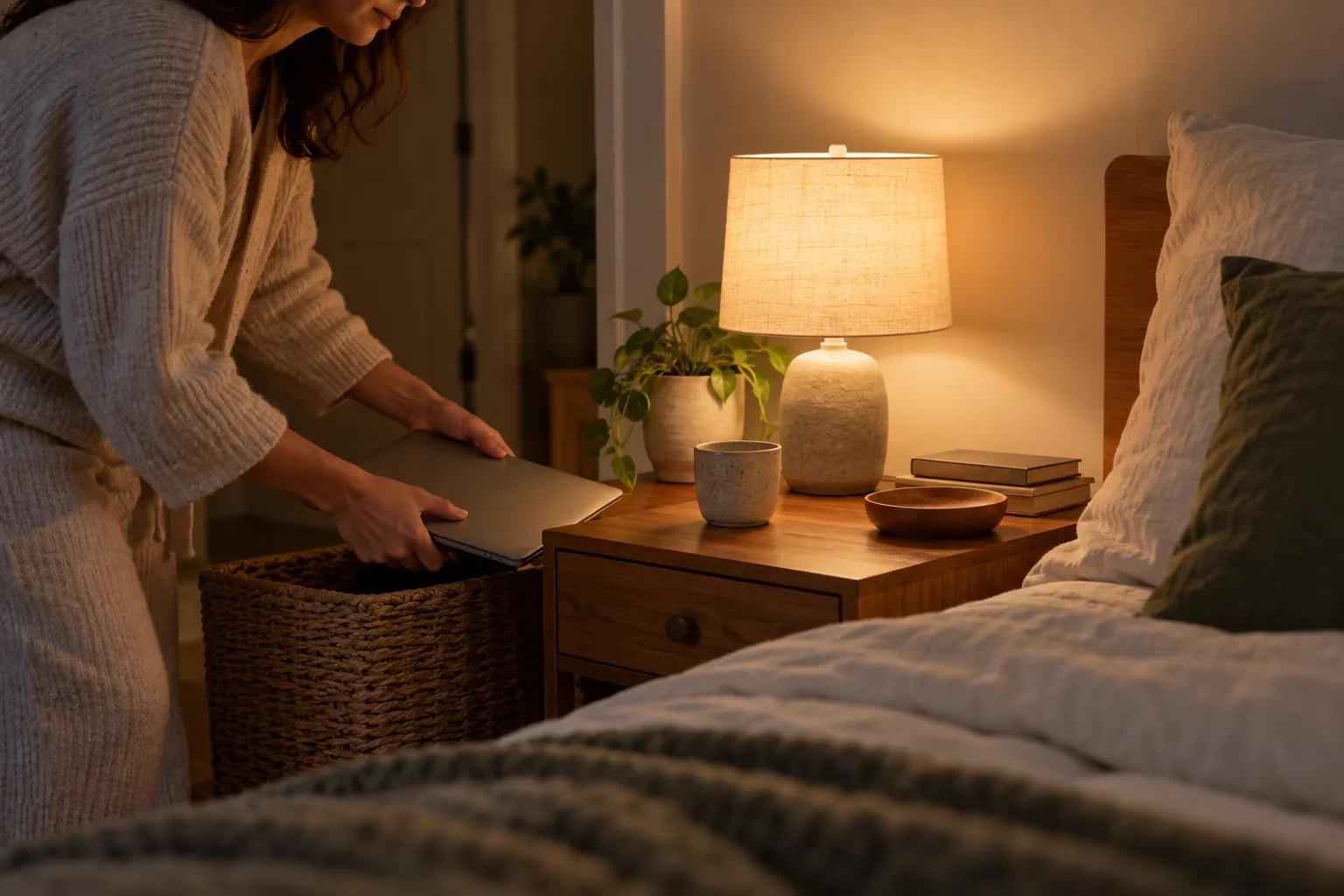
Let the bed stay connected to sleep
Real bedrooms often have to be offices, laundry rooms, nurseries or places to watch a programme. That is normal. Still, when practical, reduce the number of daytime activities that happen in bed.
Put work materials away at the end of the day. Charge devices somewhere that does not invite constant checking. If the room has several uses, create a repeatable transition: clear one surface, change the light, close the laptop and begin the bedtime routine.
The room does not have to be minimalist. It only needs enough separation that getting into bed does not feel like opening the workday again.
Make comfort easy to adjust
Comfort is personal. One person may prefer a firm mattress, another a softer surface. Some people sleep better with a light blanket; others need more warmth. Check the basics: does the pillow support your usual position, does the bedding allow movement and does anything create pressure or heat?
Change one variable at a time when possible. If you replace everything at once, it becomes harder to know what actually helped. Give a small change a few nights before deciding whether it belongs in your routine.

Keep phones and work cues from taking over
The issue with a phone is not that every use is equally harmful. It is that the device can bring bright light, messages, news, novelty and unfinished work into the place where you are trying to rest.
Try a boundary that matches your life. Silence non-essential alerts, finish work messages earlier, keep the phone across the room or use a separate alarm if that makes the change easier. A small reliable boundary is more useful than a rule that lasts two nights and creates pressure.
When the room is not enough
A calmer bedroom can support a better transition to sleep, but it cannot solve every sleep problem. Stress, pain, illness, medication effects, breathing problems, shift work and persistent insomnia may need a different kind of help.
Speak with a qualified health professional if trouble falling or staying asleep keeps returning, affects daytime life or makes you increasingly worried about bedtime. Loud snoring, gasping, pauses in breathing or pronounced daytime sleepiness also deserve proper assessment.
A simple bedroom reset for tonight
- Identify the biggest disturbance: light, noise, temperature, comfort or daytime cues.
- Make one small change that addresses it.
- Put work and the most stimulating device farther from the bed if practical.
- Keep the lighting softer during the final part of the evening.
- Notice what changes over the next few nights without turning sleep into a test.
The best bedroom setup is the one you can maintain. It should make sleep easier to approach, not become another project waiting for you at the end of the day.
The short version
Make the bedroom darker, quieter and more comfortable where you can. Reduce work and phone cues, adjust the biggest disturbance first, and remember that a sleep-friendly room supports rest but is not a treatment for ongoing sleep problems.
Common questions
What is the best bedroom temperature for sleep?
There is no single temperature that suits every person. Aim for a room that feels comfortably cool rather than hot or stuffy, then adjust bedding, airflow and clothing to your own comfort.
Should I keep my phone out of the bedroom?
If the phone keeps you alert, brings work into bed or interrupts sleep with alerts, moving it farther away can help. If you need it for an alarm or safety, use quieter settings and place it where it is not the first thing you reach for.
Does bedroom décor affect sleep?
Décor matters mainly when it changes light, clutter, comfort or the feeling of the room. You do not need an expensive makeover. Start with the practical feature that is most likely to disturb your rest.
What if my bedroom is also my office?
Separate work from sleep as much as the space allows. Put work items away, change the lighting or use a consistent end-of-work cue. If the room has to serve several purposes, create one small area or sequence that belongs to winding down.
Sources
- National Institutes of Health. Healthy Sleep.
- Centers for Disease Control and Prevention. About Sleep.
- National Heart, Lung, and Blood Institute. Insomnia Treatment.
- Sleep Foundation. Sleep Hygiene.
This article is for general information and isn’t a substitute for personal medical advice. If you have health concerns, speak to a qualified professional.