
Start with food you can actually use
Protein powders are popular, but they are not the only way to build a protein-rich meal. Eggs, yogurt, beans, lentils, tofu, fish, poultry, meat, nuts and seeds can all contribute protein while also bringing other nutrients and textures to the plate.
For the wider framework, start with the Protein basics guide.
The best meal is not necessarily the one with the highest protein number. It is the one that fits your appetite, budget, culture, schedule and health needs.
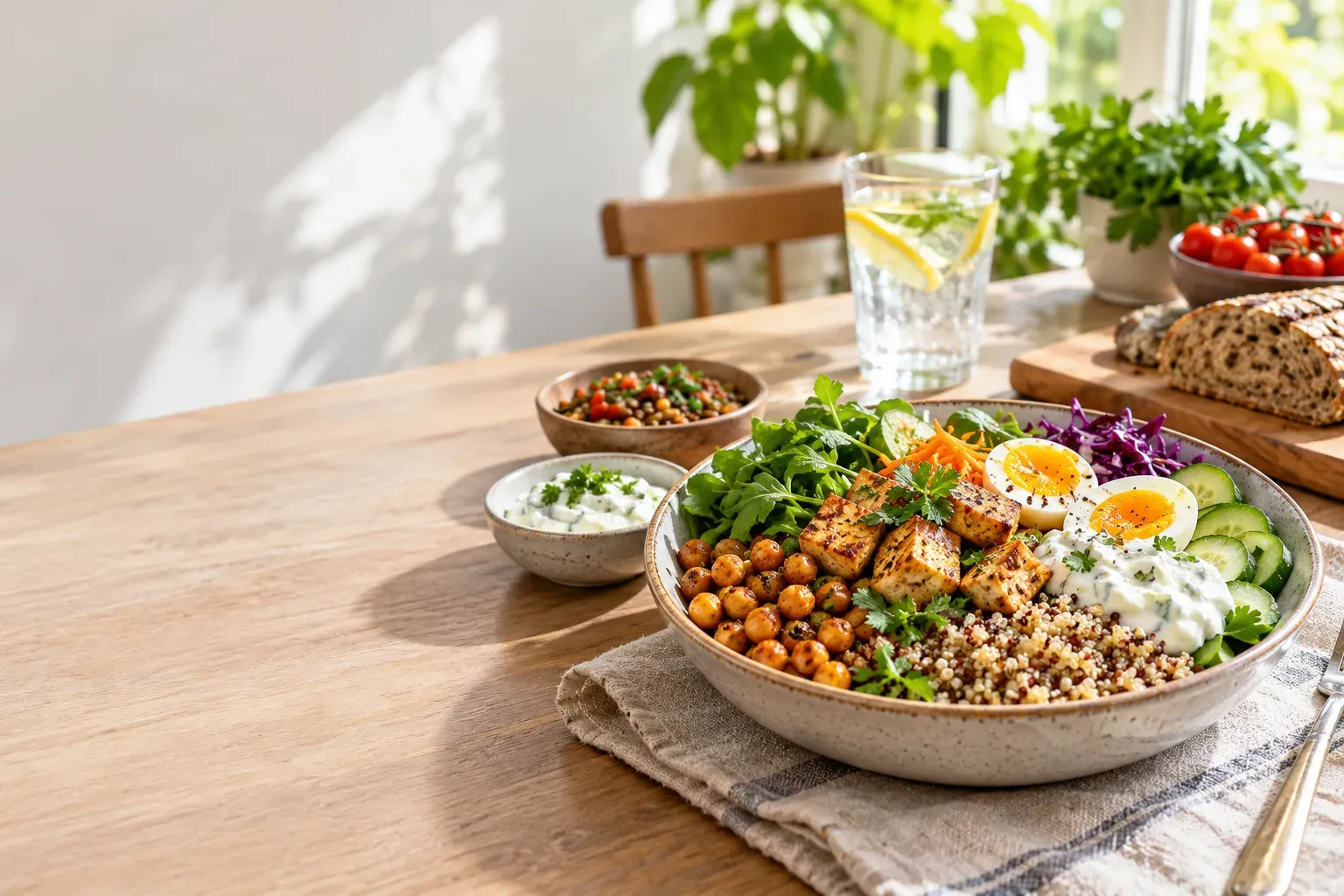
A simple meal formula
Choose one protein food, then add vegetables or fruit and a grain or starchy food:
- beans with rice and roasted vegetables,
- lentils with whole-grain bread and a salad,
- tofu with noodles or rice and stir-fried vegetables,
- eggs with potatoes, vegetables and fruit,
- fish or poultry with a grain and two vegetables,
- Greek yogurt with oats, berries, nuts and seeds.
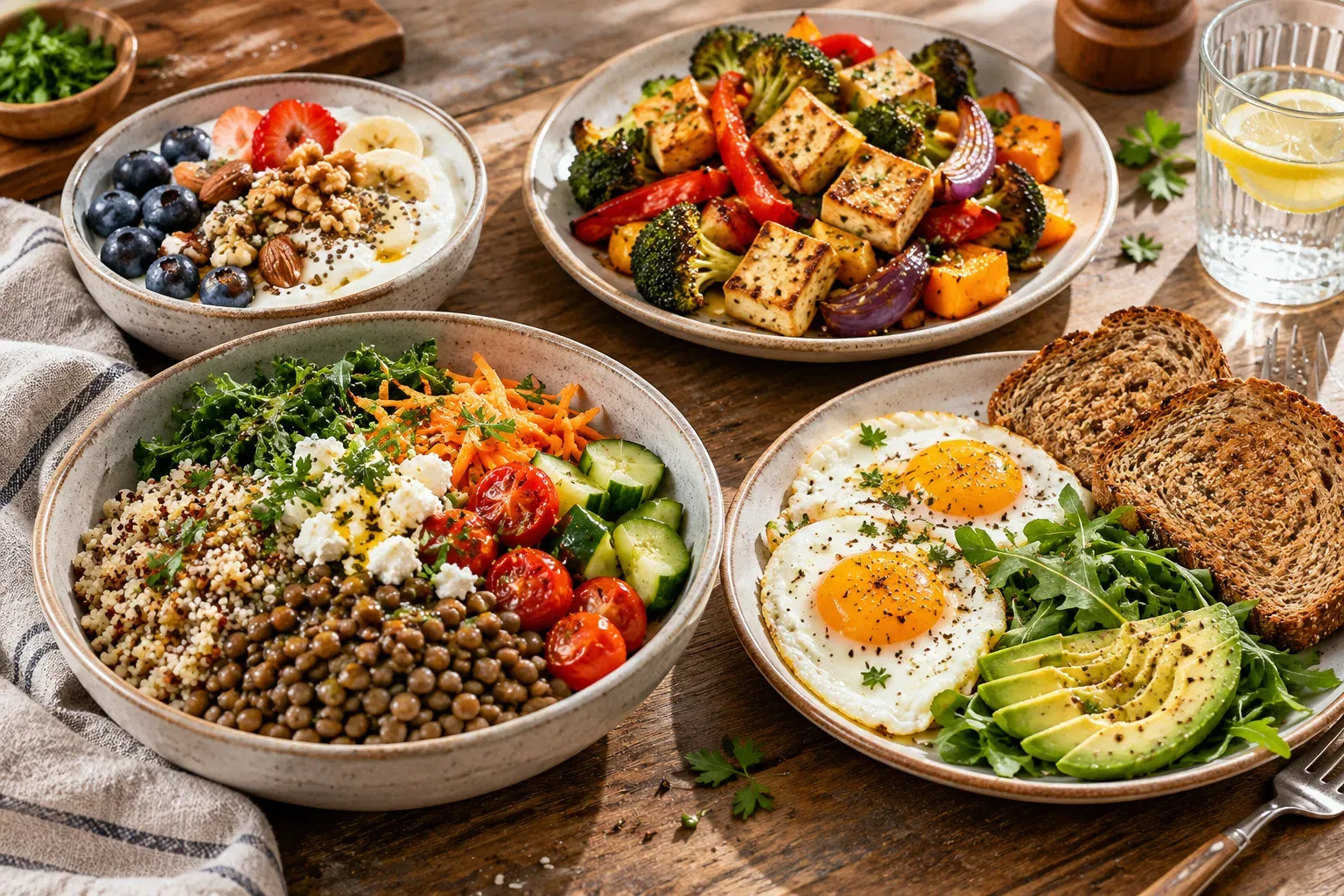
Use quick foods and leftovers
Convenience does not have to mean a supplement. Keep canned beans, eggs, plain yogurt, tofu, frozen vegetables, canned fish, nuts and whole-grain bread available. Leftover lentils, chicken, fish, tofu or roasted vegetables can become a bowl, wrap or salad the next day.
If you use canned foods, rinsing beans and comparing labels can help you choose options that fit your sodium needs. Preparation and portion still matter, a highly processed protein food may bring more sodium, saturated fat or added sugar than you intended.
Plant-based meals can be protein-rich
Beans, peas, lentils, tofu, tempeh, soy foods, nuts and seeds are useful plant-based choices. Combine them with grains, vegetables or fruit for varied meals across the day. You do not need a precise combination at every meal.
People following a vegan pattern should consider the wider nutrient picture, including vitamin B12 and fortified foods where appropriate. Individual guidance is useful during pregnancy, breastfeeding, older age, illness recovery or intense training.

When supplements may fit
Protein supplements can be convenient when food access, appetite, recovery or a specific training plan makes meals difficult. They are not automatically better than ordinary foods, and some products contain added sugar, saturated fat, sodium or ingredients you do not need.
Ask a qualified health professional before using a supplement if you have kidney disease, another medical condition, take medicines, are pregnant or breastfeeding, or are trying to manage a significant change in body weight.
Frequently asked questions
Can I get enough protein from three meals
Many people can meet their needs through a varied eating pattern, but needs differ. Include protein foods regularly and seek personalized advice if you have a specific goal or condition.
Is canned tuna or beans okay
They can be practical options. Compare labels and choose versions that fit your sodium, mercury and dietary needs.
Is a smoothie a meal
It can be part of a meal, but a smoothie may be less satisfying if it lacks fiber, protein or texture. Add ingredients that fit your needs and consider eating whole foods when possible.
Sources
- USDA MyPlate, Protein Foods.
- CDC, Healthy Eating Tips.
- CDC, How to Have Healthier Meals and Snacks.
- MedlinePlus, Protein in diet.
This article is for general education and is not a diagnosis or a personalized treatment plan. If you have a medical condition or specific dietary needs, speak with a qualified health professional.
Common questions
What is an easy high-protein meal without powder?
Try beans or lentils with a whole grain and vegetables, eggs with toast and fruit, tofu with rice and vegetables, or yogurt with oats, fruit and nuts.
Can vegetarian meals be high in protein?
Yes. Beans, lentils, tofu, tempeh, soy foods, eggs, yogurt, nuts and seeds can contribute protein depending on the eating pattern.
When might a protein supplement be useful?
A supplement may be convenient when appetite, access, recovery or a specific training plan makes food difficult, but ask a qualified professional if you have medical or dietary concerns.
This article is for general information and isn’t a substitute for personal medical advice. If you have health concerns, speak to a qualified professional.


