
Protein is one part of a meal pattern, not a competition. The most useful routine is one that gives you familiar options, fits your preferences and budget, and works alongside vegetables, fruit, grains and other foods.
Start with variety, not a magic number
Protein needs are personal. Age, body size, activity, pregnancy, breastfeeding and health can all affect what is appropriate. General guidance can help you understand the food group, but a clinician or registered dietitian is the right person for a medical or highly individualized target.
What belongs in the protein group?
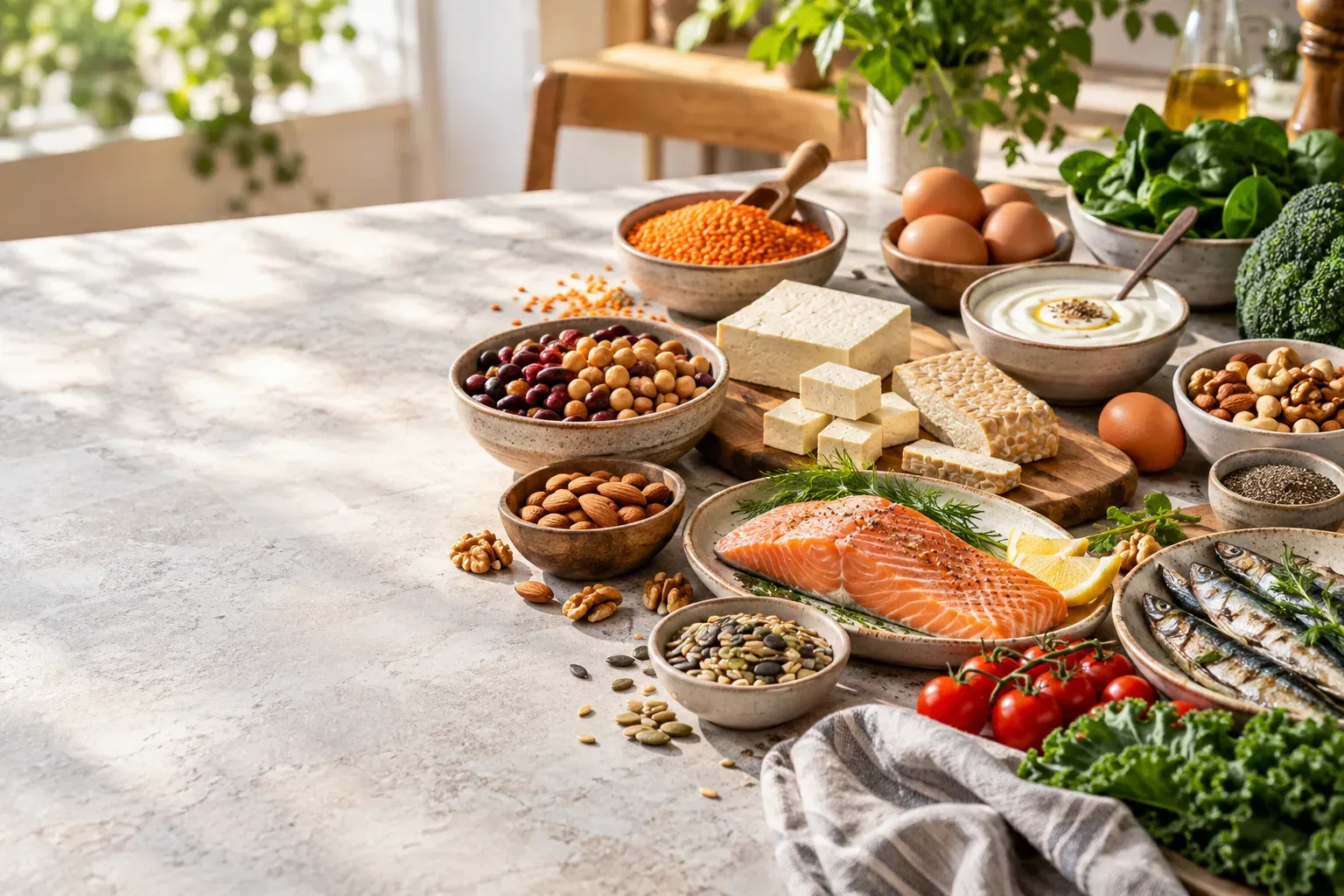
Protein foods include seafood, meat, poultry, eggs, beans, peas, lentils, nuts, seeds and soy foods such as tofu and tempeh. Dairy foods and fortified alternatives can also contribute protein as part of the wider eating pattern.
The point is not to choose one winner. Different foods bring different nutrients, textures, costs and preparation needs. Variety makes the routine easier to adapt.
Build a protein anchor into meals
Choose one protein food that fits the meal, then add the foods that make it complete and enjoyable. Eggs with whole-grain toast and fruit, lentils with rice and vegetables, tofu with noodles and greens, or yogurt with oats and berries can all be useful patterns.
The portion does not need to dominate the plate. Appetite, the rest of the meal and your usual eating pattern matter more than making every meal look identical.
Make the routine practical
Keep a few options ready: canned beans, eggs, yogurt, tofu, frozen fish, nuts or seeds. Use leftovers, frozen foods and simple combinations when time is short. A protein food that is available and enjoyable is more useful than an ideal option that never gets prepared.
When a supplement needs more thought
Protein powders and ready-to-drink products can be convenient, but they can also add cost, calories, saturated fat, sodium or ingredients you do not need. People with kidney disease, food allergies, pregnancy-related questions or a prescribed diet should ask a qualified professional before changing intake or using a supplement.
A simple weekly reset
Choose two protein foods for meals, two quick options for busy days and one flexible breakfast choice. Repeat what works, then add variety gradually. The goal is a routine you can maintain, not a perfect protein plan.
Common questions
What foods count as protein foods?
Protein Foods include seafood, meat, poultry, eggs, beans, peas, lentils, nuts, seeds and soy foods such as tofu and tempeh. Dairy foods can also contribute protein within a balanced eating pattern.
Do I need the same amount of protein every day?
Needs vary by age, body size, activity, pregnancy, breastfeeding and health. Use general guidance as a starting point and ask a qualified professional for an individualized target.
Can I get enough protein without supplements?
Many people can build a varied protein routine from ordinary foods. Supplements can be convenient in some situations, but they are not automatically necessary for everyone.
This article is for general information and isn’t a substitute for personal medical advice. If you have health concerns, speak to a qualified professional.
