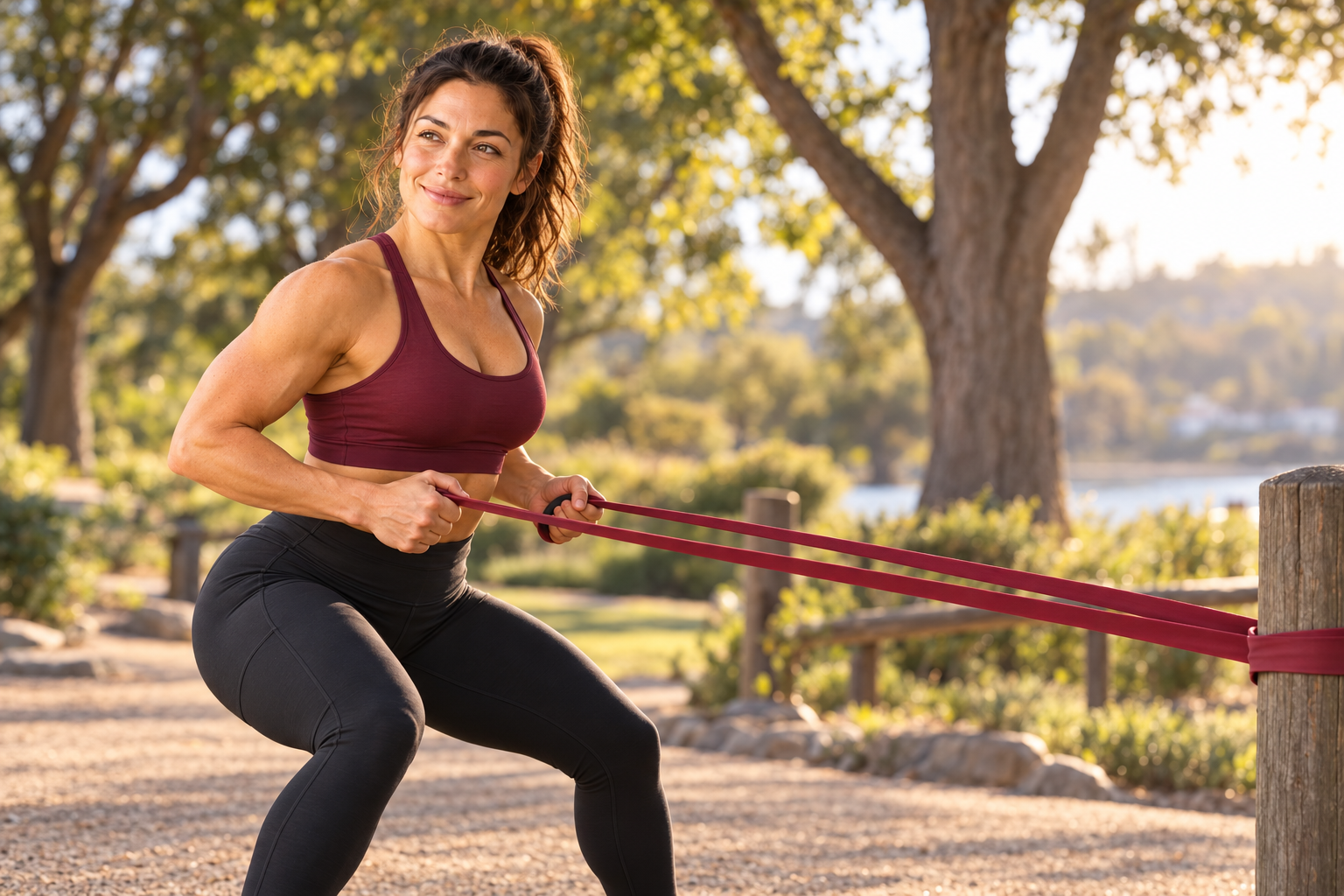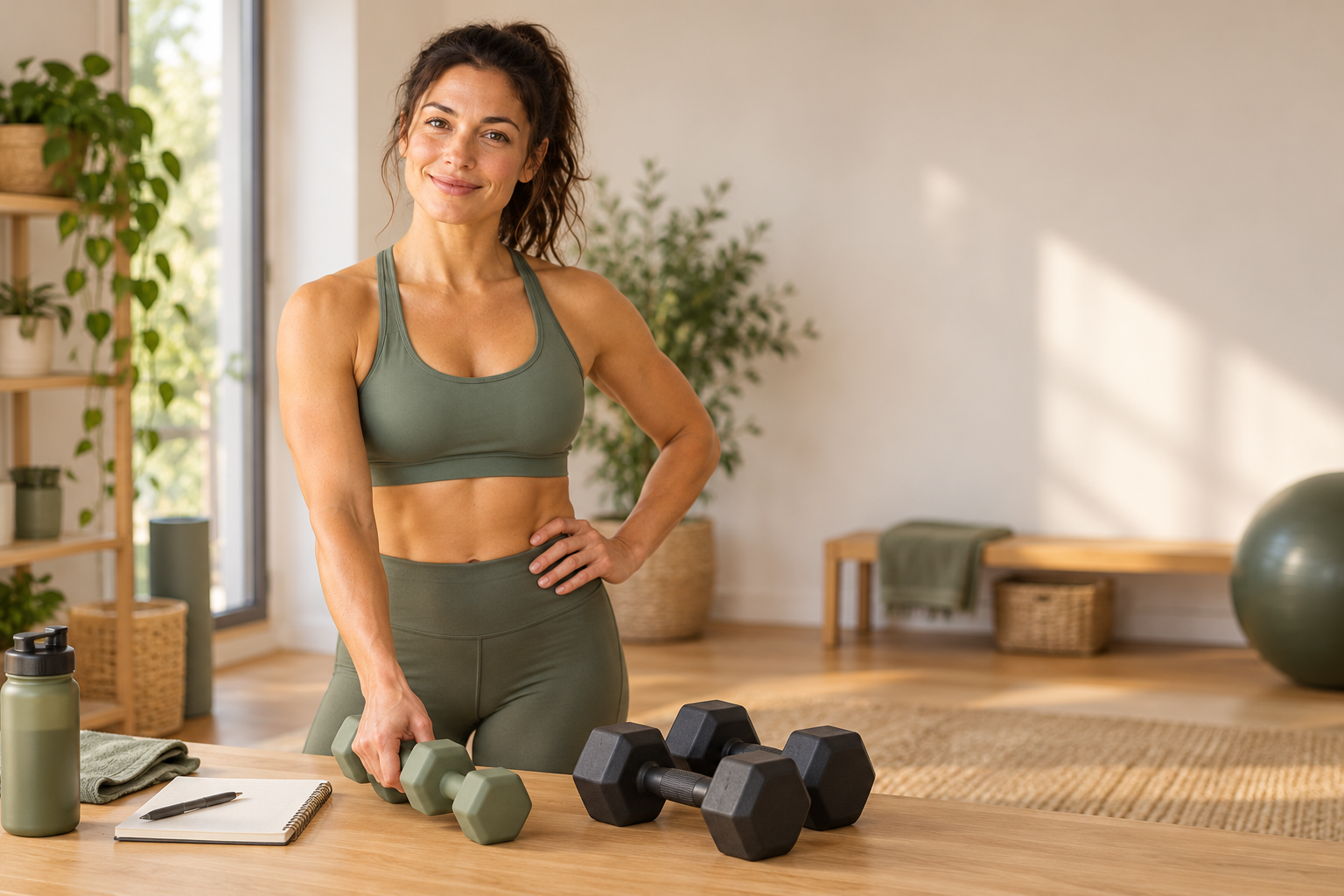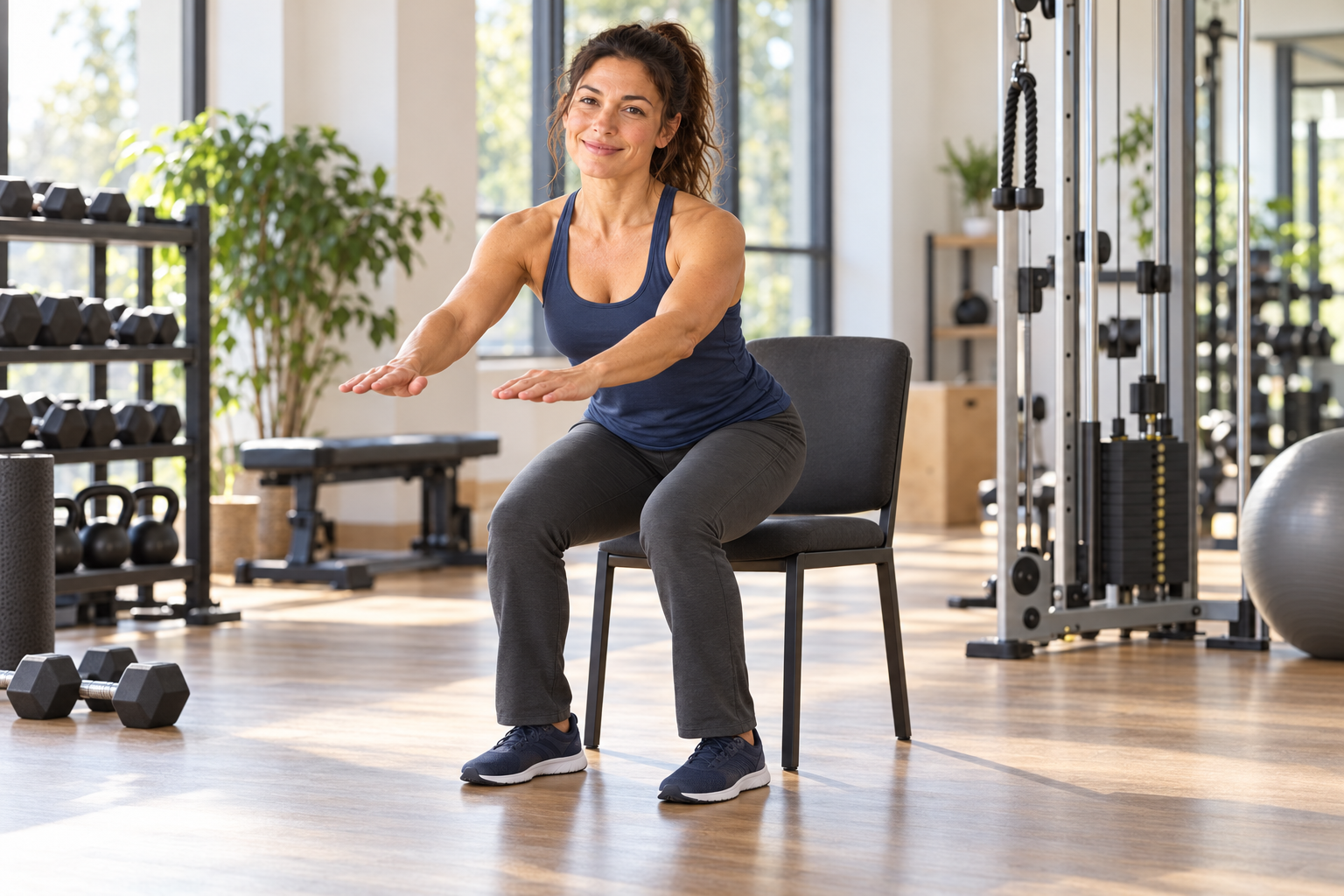
You do not need to have trained earlier in life to begin strength training after 50. You may start with a chair, a wall, a light band or a pair of small dumbbells. The first goal is not to prove what you can lift. It is to find a version of training you can repeat.
Strength work can support practical things that matter: standing from a chair, carrying groceries, climbing stairs and keeping options open as you age. The National Institute on Aging describes strength training as one way older adults can maintain muscle and support mobility and independence.
This guide focuses on what changes when you start later, how to choose a safe entry point, and how to progress without rushing. For the general movement patterns, see Strength Training for Beginners.
What changes after 50?
The principles do not change, but your starting point may. Recovery can take longer. Old injuries or joint symptoms may affect which variation feels comfortable. Balance, vision, medication, sleep and previous activity can all influence the session.
That is not a reason to avoid resistance training. It is a reason to use a smaller first step and pay attention to how you respond over the next day or two.
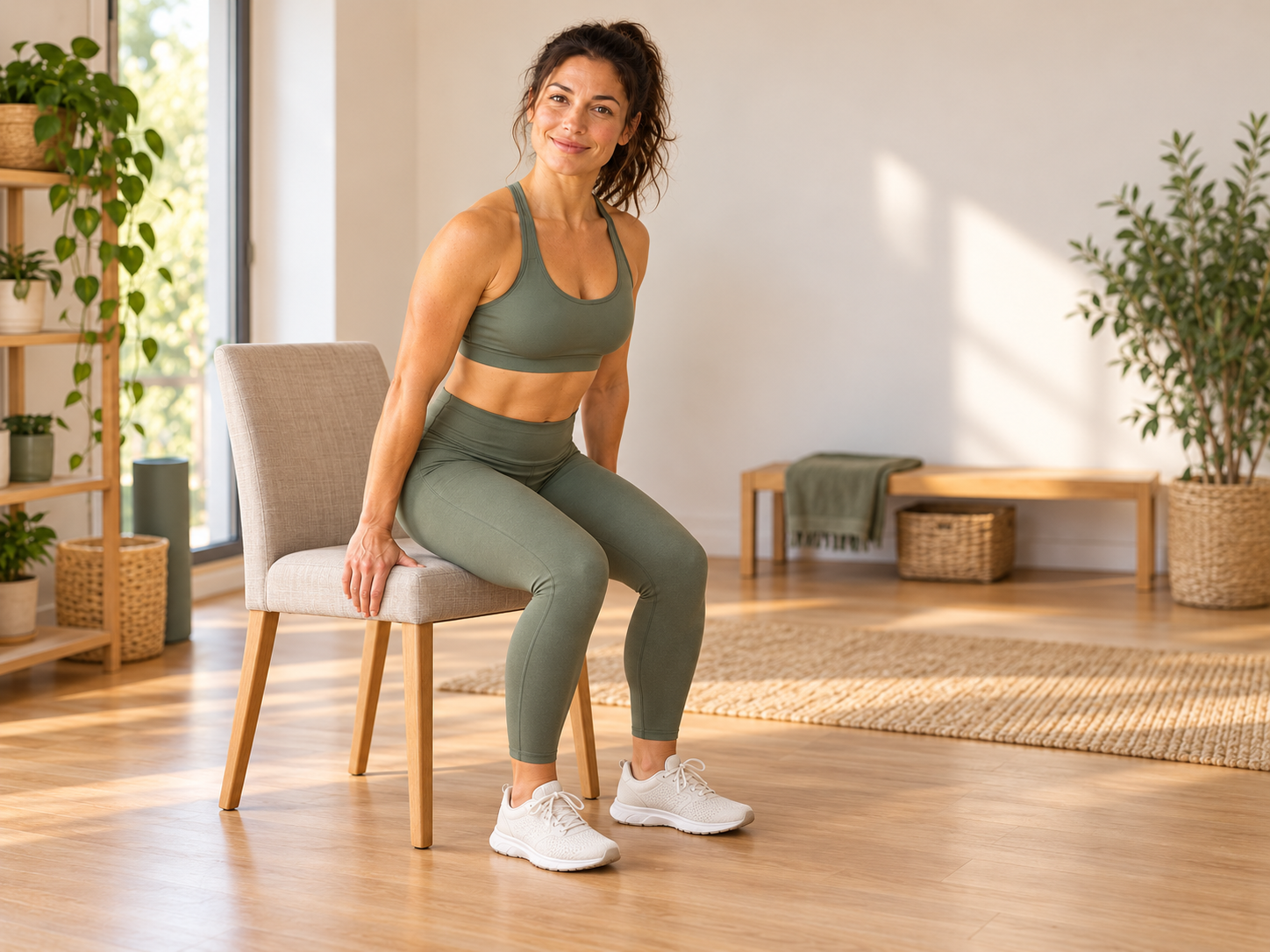
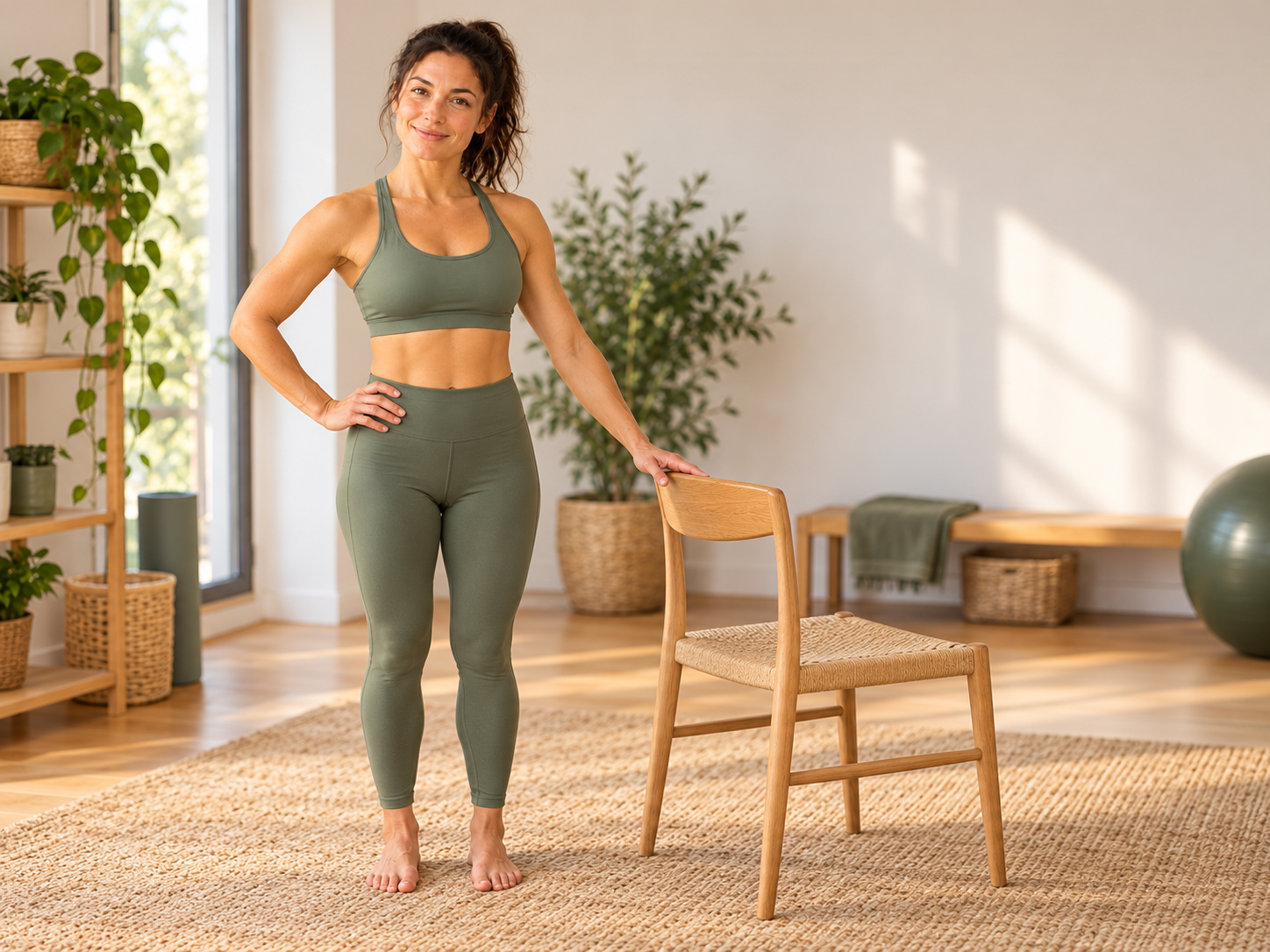
Use support when you need it. A chair or wall can make a squat, step or balance exercise more manageable. A higher bench can make getting up and down easier. The best variation is the one that lets you move with control and breathe normally.
How often should you train?
The Physical Activity Guidelines recommend muscle-strengthening activity on at least two days each week for adults, with older adults also including balance and other forms of multicomponent activity. That is a weekly direction, not a test you must pass in your first week.
Begin with two non-consecutive sessions of about 20 to 30 minutes. Leave a rest day between them. Walking, gentle mobility or ordinary daily movement can fill the other days if it feels comfortable.
If two sessions leave you unusually exhausted or sore for several days, reduce the amount before adding more. Consistency is the useful adaptation at the beginning.
What should a first session include?
Choose one easy version of each pattern:
- Squat or sit-to-stand: use a chair and keep the range comfortable.
- Hinge: practise pushing the hips back while holding a countertop if needed.
- Push: use a wall or a high surface rather than dropping to the floor.
- Pull: use a light band or a supported row if the equipment is appropriate.
- Carry: walk slowly with a light object only if your balance is steady.
Do one or two sets of five to ten controlled repetitions, stopping before your form breaks down. Rest as long as you need. These numbers are a starting example, not a prescription; the right amount depends on your history and the exercise.
How hard should it feel?
You should notice that the muscles are working, but you should still be able to control the movement and speak in short sentences. A little effort is useful. Straining, holding your breath, sharp pain or losing balance are signs to stop and adjust.
For the first sessions, leave several good repetitions in reserve. When the same exercise feels stable on more than one occasion, make one small change: add a repetition, add a little resistance, or choose a slightly more challenging variation. Do not increase all three at once.
Where do balance and mobility fit?
Older adults are encouraged to include balance activity as part of a broader movement routine. That might mean supported heel-to-toe standing, controlled step-ups, walking, dancing or tai chi, depending on your ability and interests.
Keep balance practice near a stable support and avoid turning a strength session into a test of how long you can stand on one leg. The aim is useful control, not a dramatic pose.
Mobility work can help you reach a comfortable starting position, but it does not replace strength work. Use a short warm-up that resembles the movements you plan to do, then begin with an easier version.
What about bone and muscle health?
Resistance and weight-bearing activity are part of healthy-ageing guidance because they help muscles work against resistance and can support physical function. For people experiencing menopause, NICE recommends discussing the importance of maintaining muscle mass and strength through physical activity.
That does not mean a generic article can diagnose bone loss or prescribe an osteoporosis programme. If you have had a fragility fracture, known osteoporosis, significant back pain, a neurological condition or another health concern, ask a clinician or qualified exercise professional how to adapt training.
A simple four-week start
For weeks one and two, practise the five patterns with very easy variations. Keep the sessions short and learn what your recovery looks like.
For weeks three and four, keep the same exercises and change only one thing: one extra repetition, a small resistance increase, or a slightly lower chair. If the change makes the next session worse, return to the earlier version.
Progress is not only heavier weights. Better control, steadier balance, less hesitation and more confidence all count as useful progress.

When to pause and ask for help
Stop and seek urgent medical advice for chest pain, fainting, severe shortness of breath, sudden weakness or a serious injury. Arrange individual advice for new or worsening pain, repeated falls, dizziness, uncontrolled blood pressure, a recent operation or a condition that affects movement.
Do not treat an online plan as clearance for exercise. If you are unsure, start with a conversation with your healthcare professional and bring the exact movements you want to try.
Sources
- U.S. Department of Health and Human Services. Physical Activity Guidelines for Americans Midcourse Report. 2023.
- National Institute on Aging. How can strength training build healthier bodies as we age?. 2022.
- National Institute on Aging. Exercise and Physical Activity for Older Adults: Staying Active as You Age. 2025.
- National Institute for Health and Care Excellence. Menopause: identification and management. amended 2024.
- MedlinePlus, U.S. National Library of Medicine. Exercise for Older Adults. accessed 2026.
This article is for general information and isn’t a substitute for personal medical advice. If you have health concerns, speak to a qualified professional.