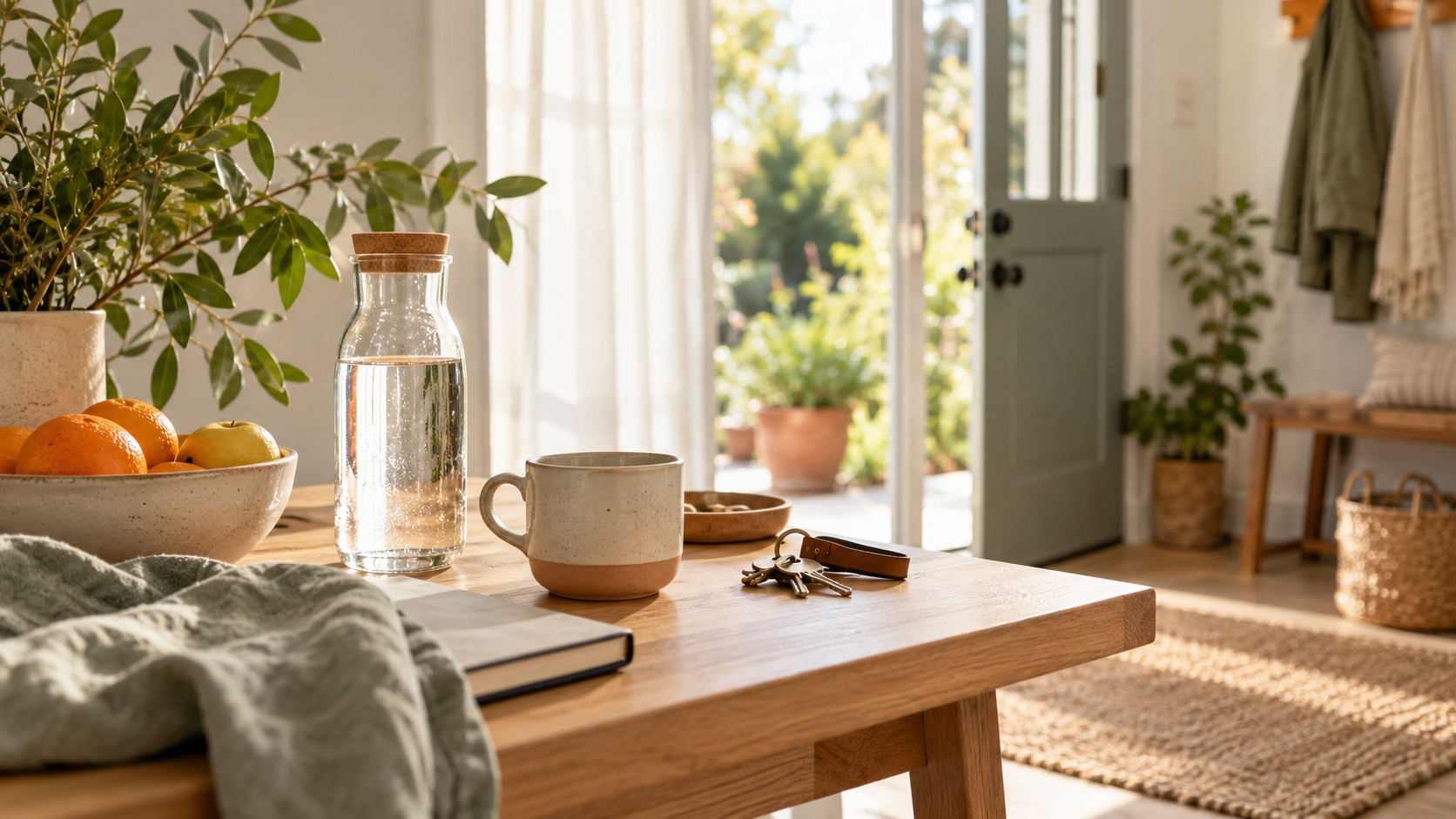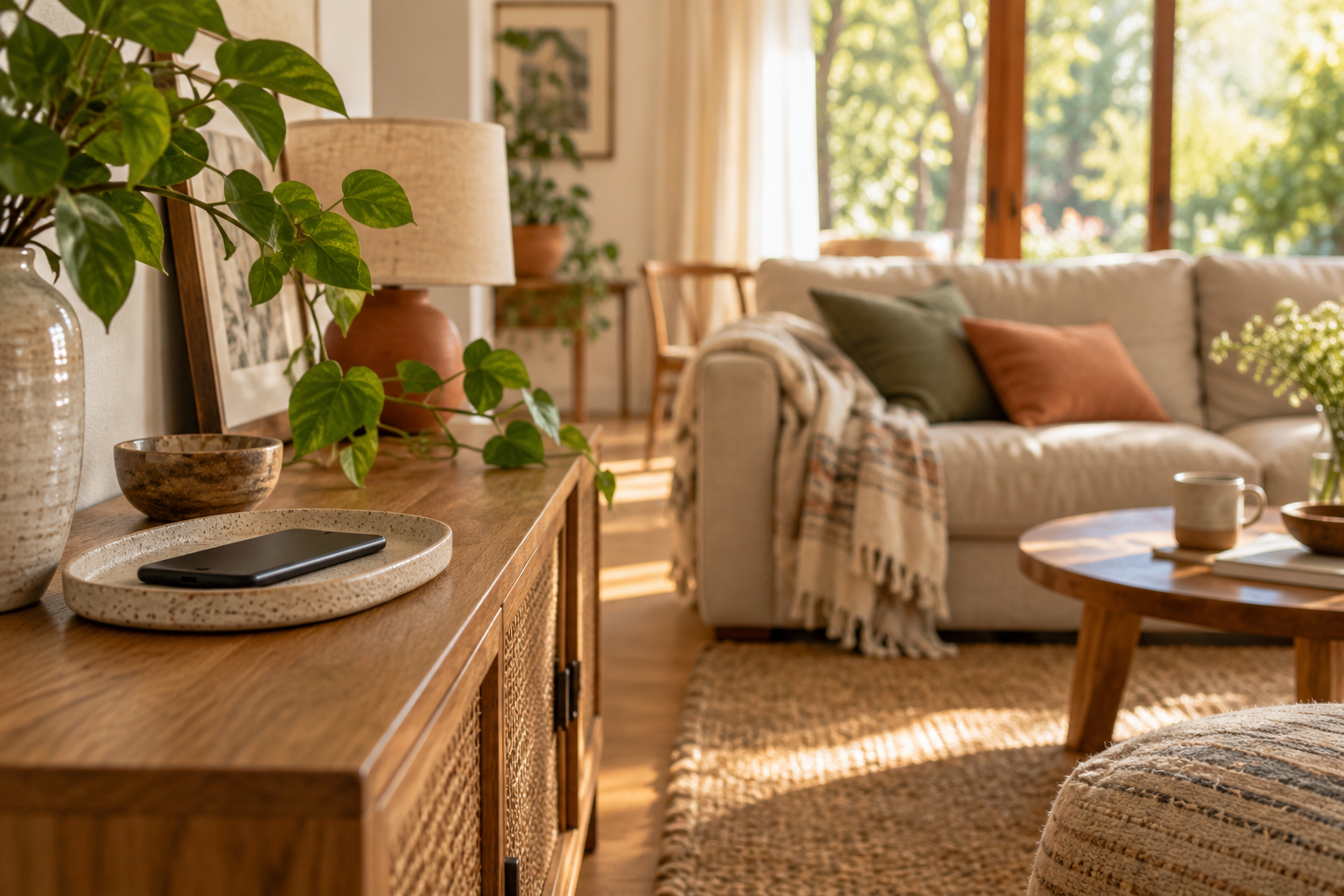
A daily routine can make ordinary life feel more supported, but it should not become another performance target. The most useful routine is usually made of a few repeatable anchors: when you wake, when you eat, how you move, when you step away from constant input and how you make room for recovery.
The aim is not to control every hour. It is to make helpful actions easier to remember when the day becomes busy, stressful or unpredictable.

Start with anchors, not an ideal schedule
An anchor is a part of the day that already happens: waking up, preparing the first drink, eating lunch, finishing work or getting ready for bed. Attach one small supportive action to that moment.
For example, you might open the curtains after waking, take a short walk after lunch or put your phone away while preparing for bed. The action is easier to repeat when it has a clear place in the day.
Choose one morning anchor and one evening anchor first. A routine that survives a difficult day is more useful than a perfect plan that works only when everything is calm.
Build around the basics
Wellbeing is supported by ordinary needs that are easy to overlook when life is demanding. Try to give your routine some space for:
- regular meals and enough fluids;
- sleep and a reasonably consistent sleep-wake pattern;
- movement that matches your body and access;
- time with people who feel safe and supportive; and
- a pause that is not filled with more demands or notifications.
You do not need to optimise every area at once. If sleep is unstable, begin there. If you spend most of the day sitting, add a few minutes of movement. If you feel isolated, make one small point of contact. The best starting point is the support that is currently missing most.
Make the smallest version obvious
Define the minimum version of each habit. It might be five minutes outside, a simple meal, one glass of water, a short stretch or sending one message. This is not lowering your standards; it is designing for real days.
Once the smallest version feels familiar, you can choose whether to extend it. There is no requirement to turn a short walk into a demanding workout or a quiet pause into a long meditation session.

Protect recovery from becoming an afterthought
Recovery is not only what happens after a crisis. It can be a few minutes of quiet, a meal without multitasking, a gentle activity, time in nature, reading or a conversation that helps you feel connected to ordinary life.
Notice what actually leaves you feeling steadier. Some activities look restful but keep your attention activated, such as checking work messages or scrolling through upsetting news. If something regularly makes you feel worse, it may not be the recovery your body and mind need at that moment.
Leave room for variation
The same routine will not fit every day. Work shifts, caregiving, illness, travel, pain, disability, cultural practices and changing energy can all affect what is realistic. Keep the anchors, but allow the action to change.
On a higher-energy day, you may cook, walk farther or meet someone. On a difficult day, the routine may be opening the curtains, eating something simple and resting. Both versions count when they support your needs without adding shame.

Review without judging yourself
After a week, ask three practical questions:
- What was easy to repeat?
- What kept getting in the way?
- What can I make smaller, clearer or better timed?
Use the answers to adjust the routine. If the same barrier keeps appearing, the solution may be changing the environment or asking for support rather than trying harder.
When a routine cannot solve the problem
A routine can support daily life, but it cannot diagnose or treat every physical or mental health concern. Speak with a qualified professional if symptoms persist, interfere with sleep or responsibilities, change your mood or make it difficult to care for yourself.
Ask for medical advice about new, severe or worrying symptoms. If you are in immediate danger or thinking about harming yourself, contact local emergency services or an appropriate crisis service now and move toward a trusted person who can stay with you. This article is not crisis care.
A simple starting template
For the next week, choose:
- One morning anchor.
- One regular meal or hydration anchor.
- One small movement option.
- One connection or recovery moment.
- One evening cue that signals the day is winding down.
Keep the plan visible, make the smallest version easy and review it once rather than judging it every hour.
Start smaller than you think
A lasting wellness routine is a flexible structure around sleep, nourishment, movement, connection and recovery. Start with a few anchors, design for difficult days and adjust the plan based on what real life teaches you.
Common questions
How many habits should I start with?
Start with one or two anchors that fit your real schedule, such as a consistent wake time, a regular meal or a short walk. Add another only when the first habits feel ordinary rather than demanding.
What should a daily wellness routine include?
It can include regular sleep and meals, some movement, time away from constant input, connection with others and a small period of recovery. The right mix depends on your health, responsibilities, culture and access.
What if I miss a day?
Treat a missed day as information, not failure. Make the next version smaller, reconnect it to an existing part of your day and resume at the next realistic opportunity.
Can a routine improve mental health?
Supportive routines can help structure daily life and make space for sleep, movement, nourishment and connection, but they are not a diagnosis or a replacement for professional care. Seek help for persistent or severe symptoms.
Sources
- National Institute of Mental Health. Caring for Your Mental Health.
- World Health Organization. Stress.
- Centers for Disease Control and Prevention. Improve Your Emotional Well-Being.
- World Health Organization. Physical activity.
This article is for general information and isn’t a substitute for personal medical advice. If you have health concerns, speak to a qualified professional.