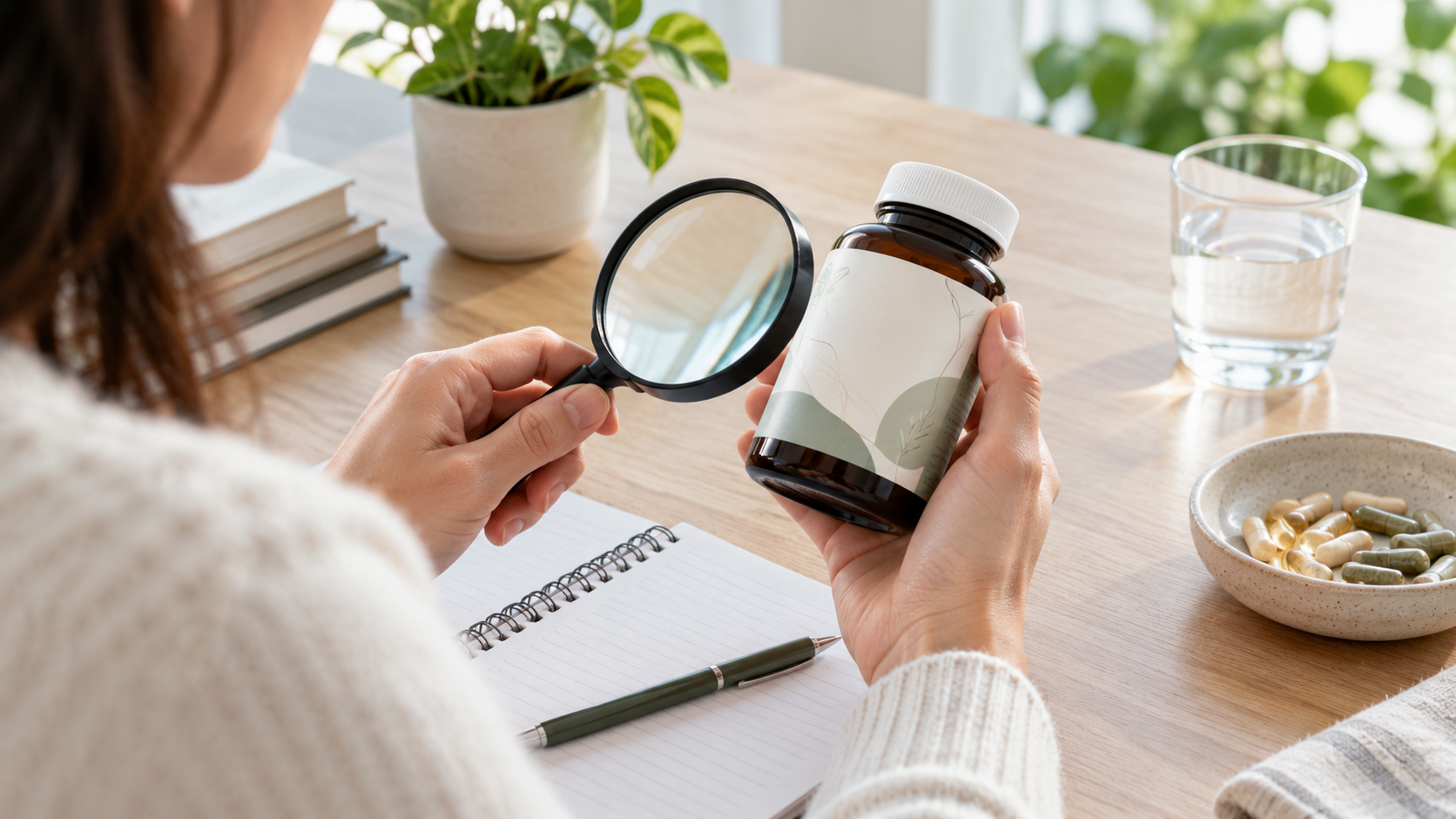
Supplement labels can look simple from the front and surprisingly technical from the back. A useful reading order makes the decision easier: identify the product, check the serving size, inspect the ingredients, evaluate the claims, then look for directions, warnings and quality information.
This guide is about reading a label, not about choosing a supplement for a particular condition.
1. Identify the product
Start with the statement of identity. Is it a vitamin, mineral, botanical, protein product or a blend? Check the net quantity, the manufacturer or distributor, and the contact information for reporting a serious adverse event.
The name on the front is not enough. A product can sound like a treatment while legally being sold as a dietary supplement, and supplements are not approved by the FDA for safety and effectiveness before they reach the market.
2. Find serving size and servings per container
The serving size tells you how much the panel is describing: one capsule, two capsules, a scoop, a teaspoon or another amount. Servings per container tells you how many times that serving appears in the package.
Do not compare products by the large number on the front without checking this line. One product may list the amount in one capsule while another lists it in three capsules. The cost, exposure and total intake can be very different.
3. Read Supplement Facts
The Supplement Facts panel should identify dietary ingredients and the amount per serving. For vitamins and minerals, a percentage Daily Value may also appear. For botanicals, the label may include the scientific name and plant part used.
Look for the form of the ingredient, not only its familiar name. Magnesium salts, iron forms, botanical extracts and protein sources can differ in amount, tolerability and practical use. If the label hides the form or uses vague language, comparison becomes weaker.
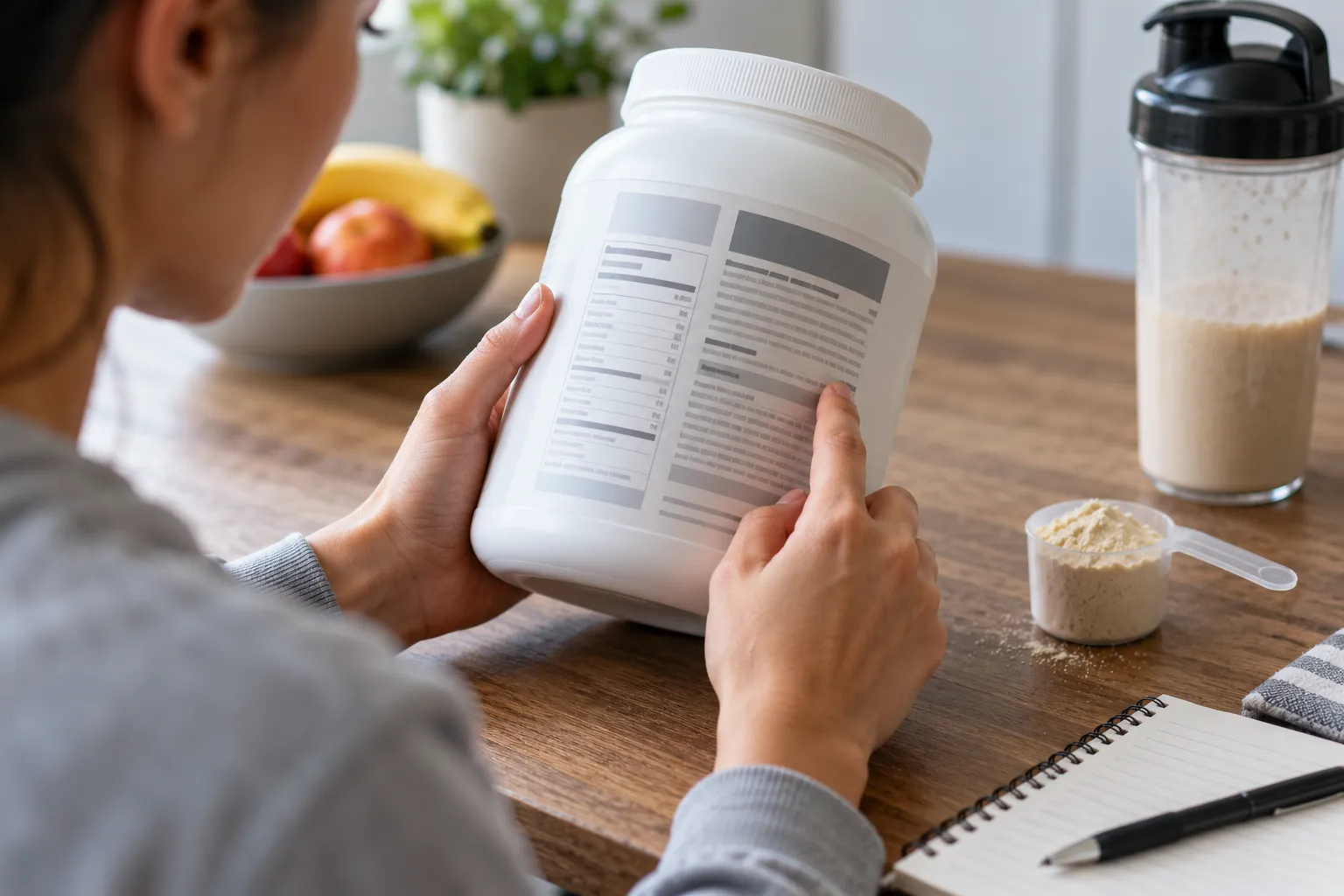
4. Understand proprietary blends
A proprietary blend may list several ingredients and a total blend weight without giving the amount of each component. That does not automatically make the product unsafe, but it makes it harder to compare doses, identify the ingredient most likely to cause a side effect, or know whether a studied amount is present.
If the product combines a vitamin, mineral, botanical, stimulant or other active ingredient, check whether you are already getting the same ingredient from another product. Duplicate use is an easy way to lose track of total intake.
5. Read Other Ingredients
Other Ingredients may include fillers, binders, capsule materials, colors, flavors, sweeteners, stabilizers or preservatives. These ingredients are not necessarily harmful, but they matter for allergies, intolerances, dietary preferences and side effects.
People with food allergies should not stop at the Supplement Facts panel. A milk, soy, egg, gelatin or other source may appear elsewhere on the label or in an allergen statement.
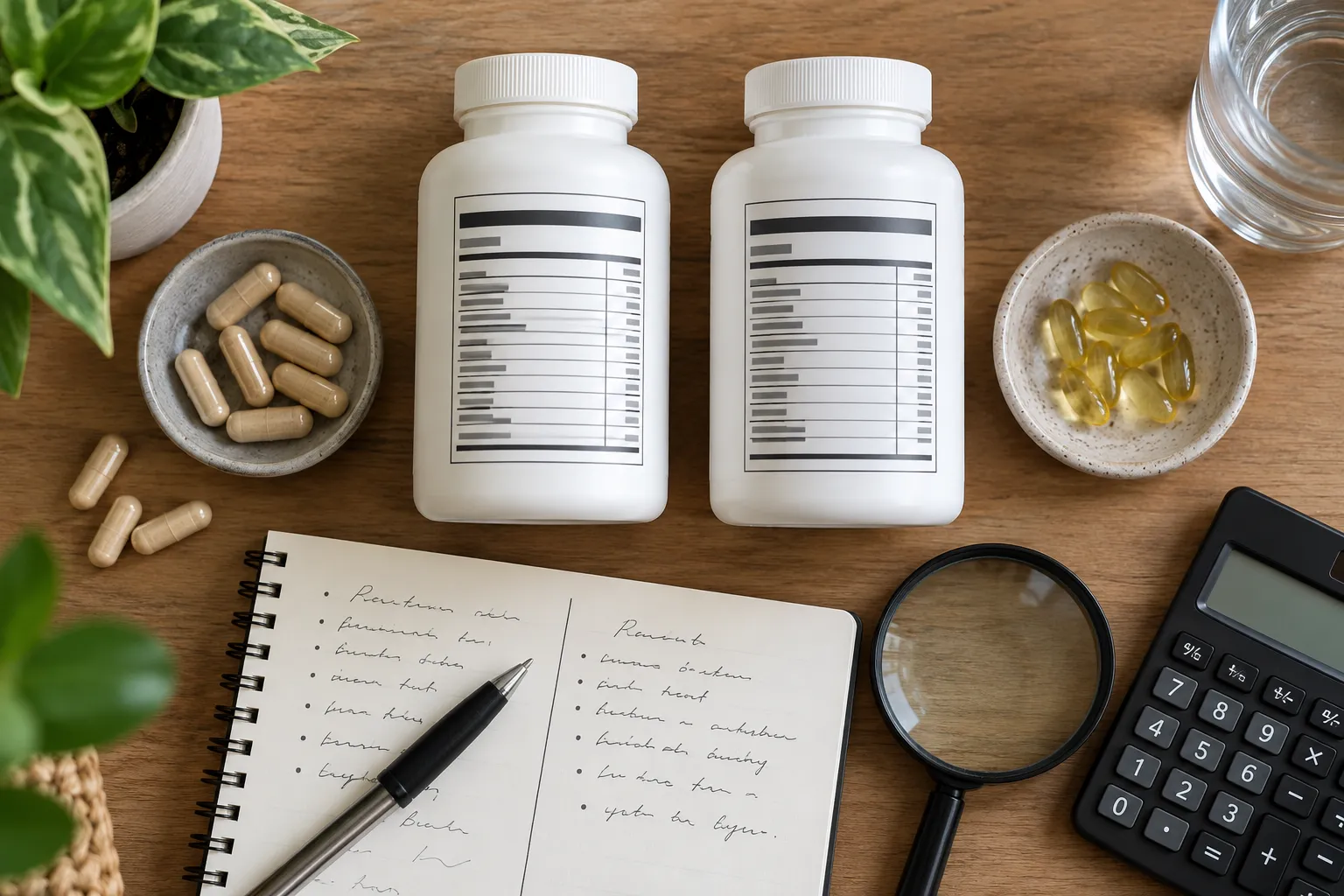
6. Separate facts from marketing claims
Words such as “natural,” “clean,” “premium,” “detox,” “supports immunity” or “clinically studied” are not a substitute for a clear ingredient amount and relevant evidence. A claim may describe a structure or function without proving that the product prevents, treats or cures a disease.
Ask three questions: What exact ingredient is responsible for the claim? At what amount was it studied? Does the study match the person, outcome and product in front of me?
7. Look at directions and warnings
Read the suggested use, maximum daily amount, storage instructions and warnings. Check whether the label says to take the product with food, avoid combining it with medicines, or consult a professional for pregnancy, surgery or a health condition.
The label is not a personal prescription. If a person has persistent symptoms, a diagnosis, a complex medication list or a reason to use a high dose, professional advice matters more than a persuasive package.

8. Understand quality marks
Independent verification programs may audit manufacturing, review records and test whether a product contains what its label says and does not contain unacceptable contaminants. A recognizable program can add useful quality information.
But a quality seal is not proof that the product is effective for your goal, safe for every person or necessary in the first place. Treat it as one part of the decision, not as a health recommendation.
A five-minute label checklist
Before buying or using a supplement, confirm:
- Product identity and manufacturer contact details.
- Serving size and servings per container.
- Amount per serving and the exact ingredient form.
- Other Ingredients and allergen information.
- Directions, warnings and possible duplicate ingredients.
- Whether claims are specific and supported by relevant evidence.
- Whether a quality program is identified clearly.
- Whether medicines, pregnancy, surgery or a health condition make professional advice important.
The bottom line
A supplement label is most useful when read from the back forward. Start with serving size, compare actual amounts, inspect all ingredients, question broad claims and treat quality marks as limited evidence about manufacturing—not proof of benefit.
Common questions
What is the first thing to check on a supplement label?
Check the serving size and servings per container, then compare the amount per serving with your intended use.
What does Other Ingredients mean?
It lists ingredients not declared in the Supplement Facts panel, such as fillers, colors, sweeteners, flavors, binders or capsule materials.
Are proprietary blends a problem?
They are not automatically unsafe, but the total blend amount may be listed without the amount of each component, which makes comparison and dose assessment harder.
Does a quality seal guarantee a supplement works?
No. Independent verification may assess identity, purity or manufacturing quality, but it does not establish that the product will produce a desired health benefit for every person.
When should I ask a professional before using a supplement?
Ask when you take medicines, are pregnant or breastfeeding, have a medical condition, are preparing for surgery, or are considering a product for persistent symptoms.
Sources
- U.S. Food and Drug Administration. Dietary Supplement Labeling Guide: Chapter IV — Nutrition Labeling.
- U.S. Food and Drug Administration. Questions and Answers on Dietary Supplements.
- NIH Office of Dietary Supplements. Dietary Supplements: What You Need to Know.
- U.S. Pharmacopeia. Dietary Supplements Verification Program.
This article is for general information and isn’t a substitute for personal medical advice. If you have health concerns, speak to a qualified professional.