
Good nutrition is less about finding one perfect menu and more about building an eating pattern that gives you enough energy and a useful range of nutrients. The pattern also has to fit your appetite, culture, budget, cooking time, health and preferences.
This guide is the starting point for PLENTIST Nutrition. It explains the big picture first, how to assemble meals, where protein and fiber fit, how hydration works, and how to make the pattern easier to repeat.
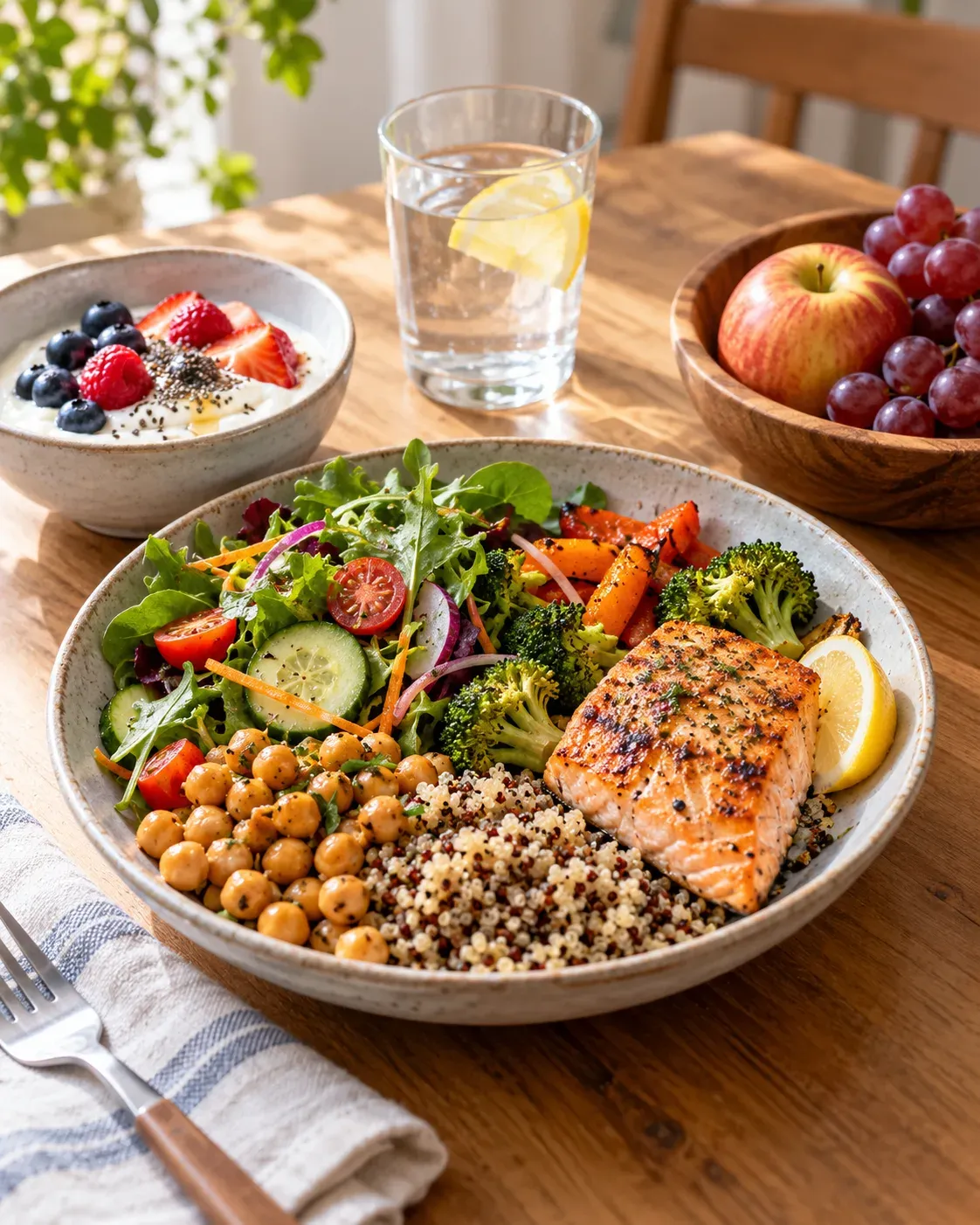
Start with a pattern, not a perfect plate
A practical meal often has three anchors:
- A plant food: vegetables, fruit, beans, peas or lentils.
- A grain or starchy food: oats, bread, rice, pasta, potatoes, corn or another familiar staple.
- A protein food: beans, lentils, tofu, eggs, yogurt, fish, poultry, meat, nuts or seeds.
Dairy or a fortified alternative can fit with the meal or elsewhere in the day. Oils, sauces and other fats can add flavor and help make food satisfying. The exact arrangement does not need to look the same at breakfast, lunch and dinner.
The current Dietary Guidelines and MyPlate approach food as an overall pattern. That leaves room for fresh, frozen, canned and dried foods, family recipes, convenience foods and occasional treats.
Use protein as an anchor
Protein foods can make meals more filling and help support the body’s normal repair and maintenance. The amount a person needs varies with age, body size, activity, pregnancy or breastfeeding, and health.
Rather than treating protein as a competition, add a clear protein food to meals that otherwise feel mostly starch or produce. Try eggs with toast, yogurt with oats and fruit, beans with rice, tofu with vegetables, or fish with potatoes and a salad.
Variety matters. Plant foods can bring protein together with fiber, while animal foods can provide concentrated protein and nutrients such as vitamin B12. Both can fit, the best choice depends on the whole pattern and your circumstances.
Build fiber gradually
Fiber comes from plant foods such as beans, lentils, vegetables, fruit, whole grains, nuts and seeds. It supports a varied eating pattern, but increasing it suddenly can cause bloating or discomfort for some people.
Add one change at a time, use oats at breakfast, add a piece of fruit, switch one grain to a whole-grain version, or include beans in one meal each week. Drink regularly and give your body time to adjust. If persistent digestive symptoms continue, seek individual medical advice rather than assuming fiber is the only cause.

Think about hydration without chasing a magic number
Water needs vary with body size, activity, weather, food, pregnancy, breastfeeding, illness and medicines. Thirst, urine color, heat exposure and activity can all provide context, but no single daily target fits everyone.
Make water easy to reach during the day. Unsweetened tea, milk and water-rich foods can contribute fluid. During ordinary daily activity, you usually do not need a specialized drink simply because you exercised lightly. In heat, prolonged activity or illness, needs can change.
People with kidney, heart or other conditions that affect fluid balance should follow their clinician’s advice instead of using a general hydration rule.
Make the pattern work on busy days
Keep a few building blocks available:
- frozen vegetables and fruit,
- canned beans, lentils or fish,
- eggs, yogurt, tofu or another quick protein,
- oats, whole-grain bread, rice, pasta or potatoes,
- nuts, seeds and a simple cooking oil,
- water and a bottle or glass you will actually use.
Combine what is available rather than waiting for an ideal recipe. A bowl, soup, sandwich, omelet, tray bake or leftovers can all be balanced in different ways.
Use labels for decisions, not judgment
For packaged foods, the Nutrition Facts label can help you compare serving size, fiber, sodium, added sugars and other nutrients. Read the serving information first, then ask whether the product fits the meal and your preferences. A label is a tool for choosing, not a score for your character.
When two foods are similar, choose the one you enjoy, can afford and are likely to use. The most nutritious option on paper is not useful if it stays unopened or makes eating feel impossible.
A simple weekly reset
Once a week, choose:
- Two proteins that can work in more than one meal.
- Two vegetables, using fresh or frozen options as needed.
- Two fruits for breakfasts or snacks.
- One grain or starchy staple you already enjoy.
- One easy backup meal for a busy evening.
This small plan creates options without dictating every meal. Repeat what works and change one thing when you want more variety.

When general guidance is not enough
General nutrition advice cannot account for every medical or dietary need. If you have diabetes, kidney disease, digestive disease, food allergies, a history of disordered eating, are pregnant or breastfeeding, or have unexplained weight or appetite changes, get personal guidance from a qualified health professional.
Nutrition is not a test you pass by eating perfectly. It is a pattern you can keep adjusting so that food supports your life rather than taking it over.
Common questions
What is the simplest way to build a balanced meal?
Start with a vegetable or fruit, add a grain or starchy food, and include a protein food. Add dairy or a fortified alternative when it fits your eating pattern, and drink water according to thirst and context.
Do I need to make every meal perfectly balanced?
No. A balanced pattern can develop across the day and week. Use the plate idea as a flexible prompt, not a pass-or-fail rule.
Can a balanced eating pattern be vegetarian?
Yes. Beans, peas, lentils, tofu, tempeh, eggs, dairy foods, nuts and seeds can contribute protein, while variety helps cover different nutrients.
This article is for general information and isn’t a substitute for personal medical advice. If you have health concerns, speak to a qualified professional.
